The article distinguishes local venue and accommodation claims from online games, and explains which booking details remain unverified.
A hotel described as part of a Canberra casino would be a specific property claim, not a conclusion that follows from the words “casino hotel”. The same applies to room listings, packaged stays and advertised deals: each depends on an identifiable venue and current commercial terms. Without those details, a casino-themed label cannot establish that a hotel exists, that it is connected to a casino, or that a room can be booked there.
That distinction matters because accommodation searches can blend several separate arrangements. A property might be operated by a casino, located nearby but run independently, or included in a package sold through another business. Those are not interchangeable. A room in a nearby hotel would not, by itself, make that hotel a casino property; nor would a casino reference in a listing establish that accommodation is on the same site.
A usable accommodation offer identifies the property and the basis of the price. Room type, occupancy, dates, cancellation conditions and any inclusions affect the final amount. A headline rate without those terms is not a comparison: it is a number detached from the booking conditions.
Choosing a casino for Canberra means checking the details that matter to you before signing up, rather than relying on the label alone. This list highlights the specific licensing, deposit, and payout information available for each operator.
Bizzo Casino
Bizzo Casino is listed with a Curacao Gaming Control Board license under TechSolutions Group N.V.
Kingmaker
Kingmaker lists crypto payouts at around 90 minutes and fiat payouts at 1–5 days. Its minimum deposit is A$30.
Vegaz Casino
Vegaz Casino lists Curacao license OGL/2024/1335/0780. Its minimum deposit is EUR 20.
JeetCity Casino
JeetCity Casino is listed with a Curacao eGaming license under Dama N.V.
Thor Casino
Thor Casino lists a Curacao license from Antillephone N.V. under Versus Odds B.V. Its minimum deposit is EUR 20.
LevelUp Casino
LevelUp Casino lists Curacao eGaming license OGL/2023/174/0082 under Dama N.V. Its minimum deposit is A$15.
LuckyVibe
LuckyVibe is listed with a Curacao Gaming Control Board license, OGL/2023/176/0095, under Hollycorn N.V.
JustCasino
JustCasino is listed with a Curacao Gaming Control Board license.
Ricky Casino
Ricky Casino lists crypto payouts in under an hour and PayID payouts in 1–3 business days. The minimum deposit is A$20, or A$30 to qualify for the bonus.
Wild Tokyo
Wild Tokyo lists a Curacao license, crypto payouts in 30–60 minutes, and fiat payouts in 1–5 days. Its minimum deposit is A$10.
The phrase “casino hotel deal” can also imply a benefit that may not be included. A quoted stay could cover a room only, while meals, entertainment, parking or other services may have separate terms. Those elements should not be treated as part of a package unless the offer names them and states how they are provided. The same standard applies to claims about casino access: proximity, a shared building and an operating connection are different facts.
For someone comparing places to stay in Canberra, the decision can be divided into two checks. First, establish the property and its location using a current booking or business listing. Then assess the specific room offer, including its dates, total charge and conditions. A casino association should be counted only where the relationship is stated clearly. This avoids paying for an assumed feature that the booking never included.
A room search and a casino visit also involve different practical decisions. Accommodation requires a confirmed reservation, while venue access and operating arrangements depend on the venue itself. Neither should be inferred from the other. A hotel listing cannot confirm casino hours, and a casino reference does not establish that rooms are available on site. Keeping those checks separate prevents a lodging assumption from becoming a venue plan.
 Darwin Casino: Facilities, Stays and Venue DetailsExplore claims about Darwin Casino, from facilities and events to stays, dining and access, with unconfirmed details kept distinct from established facts.
 Victoria Casino Hotels, Rooms and Stay DealsCompare casino hotel rates on the same dates and room type, and explore searches for poker, dining, parking, accommodation and other casino…
The wording “Canberra casino hotel” may sound like a single destination, but it does not identify a property or confirm an operating arrangement. Search results, informal descriptions and promotional language can place a hotel and a casino in the same context without proving that they are one business or one complex. The distinction is material: it affects where the room is, what the price covers and which business is responsible for the booking.
The same caution applies to plural descriptions of casino hotels in Canberra. A plural phrase does not establish that several qualifying properties exist. Nor does a request for hotel rooms establish room categories, availability, rates or special offers. Each of those details requires a current, property-specific listing. A deal is not a stable feature of a location; it depends on dates and terms that can change.
For a cost comparison, the sensible unit is the complete stay on the chosen dates, not an implied casino benefit. Any advertised inclusion should be checked against the booking conditions, and any supposed connection to a casino should be explicit. Until a named property and its terms are confirmed, “casino hotel” remains a description to verify, not a basis for assuming that accommodation is attached to a Canberra casino.
Poker machines and poker tables are different forms of gambling. A poker room or tournament involves card play; Electronic Gaming Machines (EGMs), commonly called pokies in Australia, operate through individual game outcomes. Searches for poker at a Canberra venue can therefore refer to more than one activity, and the rules discussed here concern poker-machine gambling in NSW.
The legal minimum age for playing poker machines in NSW is 18. Venues must check identification before allowing gambling on these machines, and underage play or a failure to meet identification requirements can have legal consequences. An age check is not a formality: it determines whether a person may take part at all.
NSW also requires pre-commitment: a player sets a loss limit before starting. That limit gives the session a defined stopping point. It is not a forecast of likely losses, nor does it make further play affordable. Once the limit is reached, the original budget—not the hope of reversing the result—is the relevant figure.
The cost of a session depends on the amount staked and how long play continues. A machine’s next outcome is not made more favourable by earlier losses; increasing stakes to recover money adds exposure without changing that basic calculation. A session budget should be set from money available for entertainment, after essential expenses, and treated as a maximum loss rather than a target to spend. Chasing losses turns a bounded cost into an open-ended one.
The scale of the NSW club sector provides context, but not a guide to a Canberra venue. Club Liverpool has more operating poker machines than any other club in the state. That comparison says something about the size of one club’s machine operation; it does not establish the number of machines, table games or facilities at a Canberra casino.
 Perth Casino Hotel Stays and Room DealsCompare Perth casino room deals by total stay cost, room type, dates and guest details, and check whether package extras and charges…
 Melbourne Casino Stays, Rooms and Venue DetailsCompare stay-package terms and find practical venue information. Room rates depend on dates, stay length, occupancy and the selected rate.
A poker-machine session can also be confused with a poker tournament when the same word appears in both descriptions. The cost structure is different: machine play accumulates through repeated wagers, while tournament entry and rules depend on the event. No tournament terms should be inferred from the existence of poker machines, and no machine rules establish whether a poker room or competition is available.
For practical budgeting, the pre-commitment limit and the personal session budget should not be treated as interchangeable. The first is part of the NSW system; the second is a private spending decision. A lower personal cap can keep gambling expenditure within a household budget, while a higher cap does not create a greater chance of recovering losses. The amount already spent is not a reason to continue.
The relevant checks are therefore straightforward: confirm eligibility through identification, set a loss limit before play, and stop when the planned budget is exhausted. Poker machines offer no mechanism for settling a past loss by improving a future result. A session has a cost; extending it changes that cost, not the odds.
A request for baccarat in Canberra, a casino bar, parking or a map concerns a physical place. These are practical venue questions: whether a location exists, where it is, what facilities it has and how to reach it. An online game lobby answers a different set of questions. Its games and access rules do not establish that a Canberra venue has a bar, car park or baccarat table.
Game titles on a website or an online casino's contact page are not evidence of local table availability or a local venue directory.
The distinction matters because the same casino language is used for both settings. Baccarat and craps can describe table games at a venue or games presented online. A game title on a website is not evidence of a local table, and an online casino’s contact page is not a local venue directory. Likewise, a map result needs to identify a physical address, not merely a brand or an online service.
For a venue-based plan, the useful details are concrete: the location, the route to its entrance, parking arrangements, contact channels and any listed entertainment. A map should lead to the venue itself. A contact number should belong to the relevant business or operator, rather than to a comparison page or unrelated service. Those checks establish what the details refer to; they do not turn an online casino listing into a Canberra venue.
The same test applies to a bar or a concert. A reference to a bar may mean a venue facility, a nearby business or a feature of an unrelated casino property. Concert information needs to identify the location and event, not just use casino wording. Without a clear link to a physical address and operator, those terms remain ambiguous.
 Adelaide Casino Guide: Hotels and Visitor InformationCompare nearby stays and booking terms, then find information on dining, entertainment, poker, transport and parking. Rates may exclude charges or require
 Best Casino in Queensland: What Search Terms ConfirmLearn how to distinguish casino hotels from nearby stays, poker rooms from poker machines, and why dining, breakfast and rewards offers need…
A Canberra casino contact request should therefore be treated as a request for a specific local business contact, not as a general enquiry about gambling. A phone number or map pin cannot be inferred from the type of game offered online. Details should be checked against the named venue’s own current information before they are used to plan a visit.
Online access has a different legal position from visiting a physical venue. Under the Interactive Gambling Act, operators based in Australia cannot provide online casino games such as pokies, blackjack and roulette to people in Australia. Offshore platforms may be technically accessible to Australian players, but they are not regulated under Australian law. That status does not confirm a Canberra location or any local facility.
The practical distinction is also important for game names. An online baccarat or craps page describes a digital product; it says nothing about whether the same game is available at a local table. Conversely, a physical venue’s address or event listing does not establish that its games can be played online. Each claim needs to be tied to the service it actually describes.
For planning a visit, the relevant information is the physical venue’s identity and location. For online play, the question is the service’s legal and operational status in Australia. Combining the two creates an unreliable picture: a game listing cannot supply a car park, and a venue map cannot resolve the rules governing online casino games.
Legal Restriction
Under the Interactive Gambling Act 2001, operators based in Australia cannot provide real-money online casino games to people located in the country.
A Canberra address does not change the rules for online casino games. Under the Interactive Gambling Act 2001, operators based in Australia cannot provide real-money online casino games to people located in the country. Pokies and table games offered online fall within that restriction. A website’s Australian branding, local currency display or reference to Canberra does not make those services lawful.
Offshore platforms occupy a different position, but that does not make them Australian-regulated casinos. It is technically not illegal for an Australian player to use an offshore service, while the operator is not regulated under Australian law. A foreign gambling licence is not an Australian licence and does not provide the protections of local regulation. Offshore access therefore carries a different set of risks from using a lawful Australian gambling service.
Access can also be restricted in practice. Operators or software providers may use a player’s IP address to identify location and block access from excluded countries. A game missing from a lobby, or one that fails to load, can reflect a regional restriction rather than a device fault. A specialist review has reported that some providers have blocked Australian access in anticipation of possible future legal reforms; that is a source-specific account, not a rule that can be assumed to apply across the market.
Using a VPN to make an Australian connection appear to come from another country does not remove the legal or contractual risk. It is against the site’s terms of service and may lead to account suspension. A changed digital location is not evidence that a platform is authorised to serve customers in Australia.
 Best Casino in Brisbane: What’s VerifiedReview what can and cannot be confirmed about Brisbane casino stays, facilities and services, including how booking terms affect the final room…
 Best Pokies in Adelaide: Venue Hours and ChecksLearn why a venue’s general opening hours may not confirm pokies availability, and how to assess comparisons, travel, online risks and payment…
Payment terms require the same distinction between availability and protection. Payment methods can be restricted by region, operator or provider, so a method shown on a site should not be treated as universally usable. Credit cards must not be used for online gambling services. Offshore operators are also outside Australian regulation, leaving limited dispute-resolution options; winnings may not be protected if an operator becomes insolvent. Some operators cap weekly withdrawals at AU$4,000, a condition that can materially affect a jackpot payout.
Promotional terms do not repair those limitations. Bonus conditions may impose high wagering requirements, set a maximum cashout or allow winnings to be voided under specified clauses. The value of an advertised bonus therefore cannot be assessed from its headline alone: the qualifying rules and withdrawal conditions determine what, if anything, can be paid out.
A Canberra search for online bingo or casino games may lead to services that are not authorised to offer those games to people in Australia. The relevant distinction is not whether a site can be opened, but whether the service is lawful and what recourse exists if a payment or account dispute arises. Australian gambling services that operate lawfully require the appropriate local authorisation; an offshore casino licence does not substitute for it. For online casino games, the legal boundary remains the operator’s prohibition on supplying them to customers in Australia.
A hotel described as being near a casino is not the same as accommodation operated by the casino. The first is a location claim; the second implies a direct property or booking relationship. Neither should be assumed from the phrase “casino accommodation” alone.
Attention A hotel described as being near a casino is a location claim and does not imply a direct property or booking relationship.
A listing that combines a hotel name with casino wording may refer only to a separate property, an advertising phrase or a search category.
The distinction matters when calculating the full cost of a stay. A package price is meaningful only when its components and conditions are clear: which property supplies the room, what dates are covered, whether the price includes anything beyond lodging, and what cancellation terms apply. Without those details, a headline deal cannot be compared fairly with a room booked separately. A discount label is not a final amount.
“Near” also needs a measurable definition. It might refer to a short walk, a drive or simply the same general area; those are not interchangeable for transport planning. A map pin, property address and route should be checked before travel arrangements are based on proximity. If a listing does not identify the property clearly, the location claim cannot settle the question.
The same care applies to promotions. A casino promotion and a hotel offer are separate commercial terms unless the parties and inclusions are explicitly stated. A gaming promotion does not establish that a room is included, discounted or available, and a hotel deal does not establish access to a casino. Any offer should be assessed against its actual price, dates, exclusions and cancellation rules—not against the word “deal.”
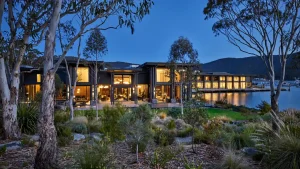 Tasmania Casino Stays, Facilities and Booking TermsCompare casino hotel packages by their total cost and stated inclusions, and check room category, guest coverage and occupancy conditions in the…
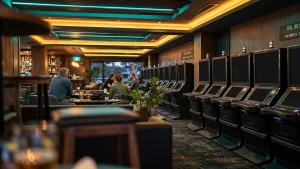 Best Pokies in Brisbane: Hours and Venue ChecksLearn why a venue’s listed opening hours may not match gaming-room availability, and what to check when searching Brisbane areas or online…
For a practical comparison, the booking record needs to identify the accommodation provider, the exact stay dates, the room basis and the total payable amount. Any added transport, taxes or other charges should be checked in the terms rather than presumed to be covered. If casino access is part of the proposed arrangement, that detail should be stated separately and confirmed with the relevant business.
A Canberra stay can still be arranged independently of any casino-related wording. The defensible approach is to select accommodation by its own address and booking conditions, then verify any separate venue plans directly. Until a specific property and package are documented, “near the casino” remains an unpriced description, not a confirmed room offer.
Breakfast, buffet, resort and rewards labels describe different things. A breakfast service is a time-specific meal offer; a buffet is a particular dining format; a resort claim implies a broader property proposition; and a rewards scheme sets conditions for earning and using benefits. None of those labels, by itself, confirms that the service or facility exists in Canberra.
Verify if the service is currently offered, its operating hours, and what the price covers.
Confirm the dining format, which meal it applies to, and the inclusions in the quoted price.
Identify which specific facilities are actually part of the property rather than implied by the label.
Review the written earning and redemption rules, including exclusions and expiry dates.
That distinction matters when comparing a phrase such as “casino resort” with a confirmed package. The word *resort* can suggest accommodation, dining and leisure facilities bundled under one property, but it is not evidence of any of them. A breakfast search does not establish that breakfast is served, and a buffet description does not establish its location, schedule, menu or price. Those details require confirmation from a venue or an identifiable offer before they can support a plan or a cost comparison.
The same applies to rewards. A rewards label alone says nothing about eligibility, how benefits are earned, what they can be redeemed for, expiry conditions or whether a benefit has a cash value. Without those terms, the financial value cannot be calculated. A displayed perk may be conditional rather than a direct discount, and the headline label does not reveal the conditions.
A useful check is to separate each claim into a verifiable item:
If those terms are not available from a reliable venue or offer source, the claim should remain unconfirmed rather than be treated as a usable feature. A photograph, broad listing title or old promotional reference is not a substitute for current operating terms. The distinction is especially important for breakfast and buffet wording: a meal can be mentioned in a listing without establishing availability for a particular date or that it is included in a room rate.
For price comparisons, the relevant figure is the final payable amount for the stated service, with inclusions and conditions identified. A “breakfast included” label is useful only when the applicable booking and meal terms are clear. A buffet headline is useful only when the offer itself is current and its scope is specified. Rewards are worth counting only when the earning and redemption conditions make their value calculable.
Until those points are established, breakfast, buffet, resort and rewards should be treated as descriptions to verify, not confirmed Canberra offerings. That keeps a search label from becoming a budget assumption.
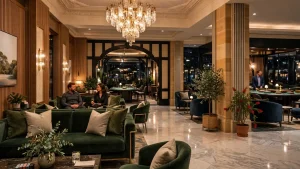 Casino Hotels in Sydney: Rooms, Dining and AccessCompare room categories and stay-package terms, assess the total cost for matching dates, and explore dining, gaming access and nearby accommodation.
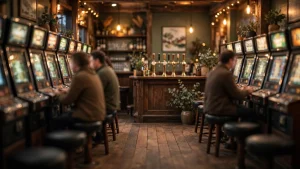 Pokies in Perth: Checking Venue Hours and AccessLearn why general opening times and “open now” listings may not confirm gaming-room access, and what venue-specific checks can establish.
A Canberra casino’s operating status cannot be established from a venue name appearing in a directory, an old review or a page that uses future-facing language. Opening, closure and reopening are separate claims, each requiring a current, attributable announcement. Without that confirmation, a timetable or status presented as settled would be guesswork.
The same distinction applies to entertainment. A general reference to casino events does not confirm that a particular performance, event series or venue programme exists in Canberra. Event details need a named organiser, a venue and a current listing that identifies what is happening. If one of those pieces is absent, the practical value of the announcement is limited; it cannot establish that tickets are available or that an event will take place at a Canberra casino.
Development claims need an equally clear paper trail. A proposal, planning application, approval and completed project describe different stages. None, on its own, proves that a casino has been built or is operating. Treating a proposal as a finished venue would be a category error, not an optimistic forecast.
Employment searches require similar care. A job advert is evidence of a vacancy only when it can be tied to an identifiable employer and is current. It does not, by itself, establish that a casino is open, or that a listed role is still available. An unverified listing should therefore not be treated as proof of local hiring.
Reviews also need context. A review may refer to a different venue, an earlier period or an experience that cannot be matched to a confirmed Canberra casino. Without a clearly identified venue and date, its comments cannot reliably establish current operating conditions, entertainment or service. A review’s existence is not a substitute for a verified location.
For practical planning, the relevant evidence is direct and specific: a current statement from the venue or organiser for operating status and events, an official planning record for a development claim, or a live employer posting for recruitment. Until those details can be tied to a Canberra venue, claims about opening hours, reopening, events, development or casino employment remain unconfirmed. A polished listing does not make an unconfirmed venue more real.
A Canberra casino address is a practical detail, not a conclusion that a venue exists at a particular location. Before arranging transport, the venue name and street address should match across the organisation’s own contact information and the booking or event details being used. A map pin, an old directory entry or a similarly named business is not enough to establish that the destination is the intended one. Where the details conflict, the journey should wait until the address is confirmed directly.
 Hobart Casino: Poker, Stays and Venue DetailsSee what available information establishes about poker, accommodation, food and venue searches, and why pokies do not confirm poker-room offerings.
 Best pokies in Tasmania: checking venues and payout claimsLearn how to verify venue and gaming-area hours, why “open now” does not confirm machines are operating, and what payout searches can’t…
Dress-code wording also needs to be tied to the specific venue and occasion. “Smart casual” can be interpreted differently by different businesses, and a policy for a restaurant or event may not apply to the wider premises. Any stated requirements should be checked for the area being visited and the date of the booking. If no rule is given, that is not evidence of a formal dress standard; it is simply a reason not to assume one.
Spa searches raise a separate question from accommodation or dining. A spa name in a directory, package description or map listing does not by itself establish that treatments are offered at a casino, that the facility is open to non-guests, or that appointments are available. Those are distinct conditions. Before including a spa visit in an itinerary, the service, location, access rules and appointment arrangements need to be confirmed with the business responsible for them.
Career information should be assessed on its own terms. A vacancy needs to identify the actual employer, role location and application route; a general careers page does not establish that a Canberra position is currently available. Job titles and workplace locations should be read together, rather than inferred from a company name or a broad regional listing.
The financial cost of a plan is not limited to a ticket or booking. Transport, time and any non-refundable arrangements become sunk costs if the destination or facility does not match expectations. Keeping those commitments conditional until the address, entry requirements and relevant service are settled is the cleaner calculation. A confirmed detail should be specific enough to act on: the place, the applicable policy and whether the service is available for the intended visit.
A restaurant linked to a Canberra casino should not be treated as an established venue without a confirmed name and current operating details. The phrase “Canberra casino restaurant” describes an expectation, not evidence that a particular dining room exists.
That distinction matters when comparing venues. A restaurant listing needs more than a casino association: it should identify the operator and location, show that the restaurant is currently operating, and provide details that can be checked, such as its menu and service hours. A polished description does not make the underlying venue real.
The same standard applies to plural claims about restaurants at a Canberra casino.
A restaurant “near” a casino is a separate claim from one inside or operated by a casino. Proximity requires a known venue and a usable address; neither can be inferred from the wording of a listing. Without those details, there is no defensible basis for describing a restaurant as nearby, estimating travel time or recommending it as part of a casino visit.
The rooftop-bar wording also needs careful handling. A rooftop bar is not automatically a restaurant, and a bar mentioned alongside a casino is not proof of a dining service, menu or view.
For anyone assessing a specific restaurant claim, the useful checks are concrete: a named venue, a current menu, prices attached to actual items, and operating information published by the venue itself. Those details should agree across the venue’s own materials before they are used to plan a meal. A casino label alone settles none of them.
A food court and a casino restaurant are different facilities. A food court implies a shared area with multiple food outlets; the word “food” in a venue description could refer to something else entirely. Those terms should not be treated as interchangeable when checking what a Canberra casino location actually offers.
The same distinction applies to a pool. A pool is a specific recreational facility, not an automatic feature of a casino, hotel or resort. A search result that pairs Canberra with casino food or a pool does not, by itself, establish that either facility exists at a local venue. The wording may reflect a broad topic, an unrelated listing or a general description rather than an operating facility.
That difference matters when plans depend on a particular amenity. A meal option does not necessarily mean a food court, and a venue’s casino status does not imply access to a pool. Any listing should identify the facility itself, its location and whether it is available to the public or subject to separate access conditions. If those details are absent, the facility should not be built into the plan.
Food-court searches also should not be used to infer menus, prices or service times. Likewise, a pool reference cannot establish opening arrangements, entry rules or whether the facility is attached to a casino or somewhere nearby. Those are separate particulars, not details supplied by a broad label.
For Canberra, the practical distinction is between a facility named and described in current venue information, and one merely suggested by a general association with casino or leisure services. Treating the association as confirmation can turn a simple outing into a detour. A venue-specific description is the minimum useful basis for relying on either a food court or a pool.
Yes. The Interactive Gambling Act restricts Australian-based operators from offering online casino games such as pokies, blackjack and roulette to people in Australia. Offshore platforms are not regulated under Australian law, and some games may be blocked for Australian players.
Australian-based operators cannot offer online casino games to people in Australia under the Interactive Gambling Act. Offshore platforms are not regulated under Australian law, although it is technically not illegal for Australian players to use them; in NSW, poker-machine gambling is restricted to people aged 18 or over and requires pre-commitment.
Yes. Online pokies use a Random Number Generator, and each spin is independent: previous results do not affect the next outcome.