BPAY mentions alone do not verify an operator’s cashier terms or establish whether real-money casino games may be offered in Australia.

BPAY and online pokies raise two distinct issues: whether a payment method is supported by a particular service, and whether that service may lawfully provide real-money casino games to people in Australia. Treating those questions as one can make a payment label seem more conclusive than it is. A reference to BPAY, by itself, does not establish that an operator accepts it, just as a general description of Australian payment habits cannot establish a specific operator’s terms.
Payment options are service-specific. The methods people use in everyday transactions do not automatically carry across to gambling websites. Australians are comfortable moving between cards, mobile wallets and services linked to banks, such as PayPal. That describes consumer familiarity, not the cashier terms of any casino. It does not establish BPAY acceptance, nor does it show that a payment option available in one setting is available in another.
The same distinction applies to labels such as “Australian” or “mobile”. A service’s presentation to Australian users does not itself confirm that a particular payment method is supported. A mobile interface also says nothing about the payment methods attached to an account. Each claim concerns a different feature and requires its own evidence: country access, game provision, device compatibility and payment acceptance are not interchangeable descriptions.
BPAY availability can vary, so check the payment options shown by a casino before you deposit. The details below highlight the information available for each operator, but do not confirm that any of them accepts BPAY.
Bizzo Casino
Bizzo Casino is listed with a Curacao Gaming Control Board licence held by TechSolutions Group N.V. No BPAY-specific information is provided.
Kingmaker
Kingmaker lists a minimum deposit of A$30, with crypto payouts taking about 90 minutes and fiat payouts 1–5 days. No BPAY-specific information is provided.
Vegaz Casino
Vegaz Casino is listed with Curacao OGL/2024/1335/0780 and a minimum deposit of EUR 20. No BPAY-specific information is provided.
JeetCity Casino
JeetCity Casino is listed with a Curacao eGaming licence held by Dama N.V. No BPAY-specific information is provided.
Thor Casino
Thor Casino is listed with a Curacao licence from Antillephone N.V. (Versus Odds B.V.) and a minimum deposit of EUR 20. No BPAY-specific information is provided.
LevelUp Casino
LevelUp Casino is listed with Curacao eGaming OGL/2023/174/0082, held by Dama N.V., and a minimum deposit of A$15. No BPAY-specific information is provided.
LuckyVibe
LuckyVibe is listed with Curacao Gaming Control Board OGL/2023/176/0095, held by Hollycorn N.V. No BPAY-specific information is provided.
JustCasino
JustCasino is listed with a Curacao Gaming Control Board licence. No BPAY-specific information is provided.
Ricky Casino
Ricky Casino lists crypto payouts in under an hour and PayID payouts in 1–3 business days. Its minimum deposit is A$20, or A$30 to qualify for the bonus; no BPAY-specific information is provided.
Wild Tokyo
Wild Tokyo is listed as Curacao-licensed, with crypto payouts taking 30–60 minutes, fiat payouts 1–5 days, and a minimum deposit of A$10. No BPAY-specific information is provided.
A useful way to read a payment claim is to identify exactly what it asserts. “BPAY accepted” is a claim about a transaction route. It is not proof that every customer can use that route, that it is available for every account, or that it applies to every transaction. Those additional conditions would need to be stated separately. A method appearing in general information about payments is not equivalent to a current, operator-specific term.
The word “pokies” can also blur separate questions. It refers to casino-style games, while BPAY refers to a payment method. Putting both in one description does not establish a connection between them. Nor does a page about payment methods establish that an operator is entitled to provide real-money casino games in Australia. Payment language should not be read as an endorsement or as evidence of legality.
That legal distinction matters in the Australian setting. The Interactive Gambling Act 2001 makes it illegal for operators to provide real-money online casino games to people physically located in Australia. The prohibition covers casino-style services such as poker, table games and pokies. The Australian Communications and Media Authority is responsible for enforcing the Act. A payment option cannot change the legal status of the service it is attached to.
 Australian Casino Sites That Accept Credit CardsLearn how reported Amex acceptance, issuer blocks, fees and withdrawal rules differ, and why a cashier option does not establish that a…
 Casinos That Accept POLi in Australia: What Is VerifiedThe article separates claims about Australian access from POLi support and explains why casino names, pokies and payment labels do not verify…
The legal position for players differs from the operator’s obligations. The Act does not explicitly criminalise an individual for using an offshore casino, but that does not make the service lawful to provide in Australia. Australian consumer law does not protect players who use offshore casinos. In practical terms, a payment claim should not be mistaken for a consumer safeguard: the presence of a familiar payment name does not supply the protections that would otherwise follow from Australian consumer law.
This leaves a clear boundary around what a BPAY reference can mean. It may describe a payment claim, but it cannot establish the broader facts about an operator, its legal position, or the terms that apply to a particular customer. Those are separate matters. A general statement about how Australians pay, meanwhile, remains general; familiarity with bank-linked services does not prove that a casino cashier supports BPAY.
The careful reading is therefore narrow. BPAY acceptance is an operator-specific payment matter, not a conclusion that follows from the popularity of other payment methods or from the wording of a casino description. And even a payment method claim would not alter the rules governing real-money online casino services in Australia. The payment question and the legal question remain separate.
A deposit method is defined by its operating terms, not by the name attached to it. For BPAY, no standard casino deposit minimum, cashier sequence or fee can be stated. A search for a low-value BPAY deposit does not establish that an operator accepts BPAY or that a particular amount would be permitted. The payment label alone supplies none of those conditions.
Attention: A payment label alone does not establish a casino's deposit minimum, cashier sequence, or associated fees.
That distinction matters because deposit costs have separate parts. The amount entered in a cashier is not necessarily the final cost if a fee applies, and a payment method’s general characteristics do not establish how a particular operator handles it. Without BPAY-specific terms, there is no sound basis for calculating a minimum payable amount, an added charge or a confirmation time. Assigning a figure would make the calculation look precise without making it reliable.
The limited procedural detail available concerns Amex, not BPAY. Where an online casino offers Amex deposits, the described sequence is to select Amex in the cashier, enter the card details and the deposit amount in Australian dollars, then submit the payment. That is a card transaction flow. It does not describe a BPAY transfer, and the steps should not be carried across from one method to another.
A specialist review describes Amex casino deposits as being processed instantly. It also characterises Amex deposits as generally having no fee, while noting that charges depend on the casino. These are method-specific observations, not a schedule that can be applied to BPAY or assumed at every operator. A deposit can only be costed against the terms attached to the method actually selected.
 EcoPayz Casino Sites in Australia: What’s VerifiedThe article distinguishes Australian-facing sites from Australian-licensed operators and explains why no EcoPayz acceptance claim is verified.
 Casinos That Accept Visa in Australia: What to KnowThe Interactive Gambling Act 2001 prohibits operators from providing online casino games to people in Australia; Visa availability does not establish permission.
For BPAY, the relevant calculation would require at least an operator’s acceptance of the method, its minimum amount, any fee and the payment instructions presented at checkout. Those details determine both whether a transaction can be made and what amount leaves the payer’s account. In their absence, neither a low minimum nor a fee-free payment can responsibly be promised. A number in a search phrase is not a payment term.
The cashier is the point where an operator’s accepted methods and transaction conditions are presented. Its entries should be treated as method-specific: an amount shown for one option does not establish the minimum for another, and a card flow does not establish bank-bill payment instructions. The same applies to speed. A processing description attached to Amex says nothing about how a BPAY payment would be initiated, confirmed or credited.
This also prevents a common accounting error: treating the deposit amount as though it were the only relevant figure. A usable comparison needs the amount accepted, any transaction charge and the conditions attached to processing. If a method’s fee is unknown, the net cost is unknown too. If acceptance itself is unconfirmed, even a proposed deposit amount remains hypothetical.
Accordingly, claims about casino sites accepting BPAY deposits need operator-specific terms behind them. A broad label or a claimed low entry amount is not enough to establish a functioning deposit route. The Amex example shows why: its cashier steps and reported processing and fee details belong to Amex alone. They cannot be used as a proxy for BPAY.
Amex Deposit Process
Selection
Select Amex in the casino cashier.
Details
Enter the card details and the deposit amount in Australian dollars.
Submission
Submit the payment for processing.
A payment option shown for deposits does not, by itself, establish how winnings can be withdrawn. The deposit and payout stages are separate transactions, with separate eligibility conditions and processing times. A reference to BPAY on a deposit screen would therefore not prove that BPAY is available for withdrawals, or that a payout through it would be instant.
That distinction matters when assessing claims about instant BPAY withdrawals in Australia. “Instant” needs to describe a defined stage: submission of a withdrawal request, the operator’s approval, or the arrival of funds in an account. Those are not interchangeable events. Without method-specific terms, the speed of one stage cannot establish the time for the entire transfer.
American Express provides a specific illustration of how a method’s role can be limited. A specialist review states that casino withdrawals using Amex require an earlier deposit made with Amex. In that account, having an Amex card is not enough to qualify for an Amex payout; the transaction history is part of the condition.
That condition cannot be transferred to BPAY. It says nothing about whether a BPAY deposit is accepted, whether BPAY can be used to receive funds, or whether a prior BPAY transaction would be required. Each of those points would need to be stated for BPAY itself.
The same separation applies in the other direction. A method that can receive a withdrawal is not necessarily a deposit method, and a deposit method is not automatically a payout route. Treating the two as one feature can make an apparent payment option look more complete than its terms establish.
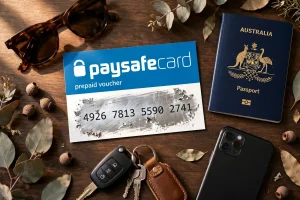 Paysafecard casino sites in Australia: what to verifyLearn what a Paysafecard deposit can establish, why it does not confirm withdrawal support, and how ACMA’s role shapes the Australian context.
 Casinos That Accept Google Pay in Australia: What It MeansLearn why Google Pay’s broad acceptance in Australia does not confirm a casino’s cashier support, withdrawal options, or availability to Australians.
A specialist review gives a timeframe of up to five days for Amex casino withdrawals to clear. That is a method-specific statement, not a general measure of casino payout speed. It cannot be used to estimate a BPAY withdrawal, and it does not establish when an operator will approve a request or when a bank will make funds available.
The distinction between processing and clearance is material. An operator may review and approve a withdrawal before a separate payment process is complete. A stated clearance period should not be read as a promise that the whole request will be completed within the same period unless the terms define what the clock covers.
The Amex example is useful for one narrow reason: payout timing belongs to the method and the transaction stage described. It does not create a benchmark for other methods. Applying an Amex timeframe to BPAY would be guesswork, not a comparison.
A claim of instant withdrawal has little financial meaning unless it identifies the method, the stage being timed, and the eligibility conditions. It should also distinguish a withdrawal request from cleared funds. If those details are absent, “instant” does not provide a reliable completion time.
For BPAY, deposit availability and payout availability must be treated as separate claims. A deposit reference cannot establish that withdrawals go through BPAY, nor that a payout is immediate. The relevant terms would need to specify whether BPAY is supported for outgoing funds and how the timing is measured. Without those details, no sound estimate of a BPAY payout can be derived from the deposit method alone.
Legal Risk
The Interactive Gambling Act 2001 makes it illegal for operators to provide real-money online casino games to people physically located in Australia.
The same caution applies to “no deposit” wording attached to an instant-withdrawal claim. A withdrawal depends on funds being eligible for payout; a phrase about a deposit or promotion does not define the withdrawal route or its timing. No such wording changes the need for method-specific withdrawal terms.
The Interactive Gambling Act 2001 prohibits operators from providing real-money online casino games to people in Australia. The Australian Communications and Media Authority enforces the Act. Australian consumer law does not protect players who use offshore casinos, so an advertised payment condition should not be mistaken for a domestic consumer safeguard.
The practical calculation is limited: a deposit method does not prove a matching withdrawal method, and a timing statement for one payment type does not set the timing for another. For BPAY, instant payout claims require BPAY-specific withdrawal terms; a separate method’s conditions cannot fill that gap.
A claim that an online casino accepts BPAY is a statement about a payment option, not proof that the service is lawful in Australia or available to people located there. The wording may describe a cashier feature, but it cannot establish the operator’s legal position, the conditions attached to an account, or whether a transaction would be processed. Those are separate questions, and none follows automatically from the payment label.
 Casino Sites That Accept Osko in Australia: What to CheckLearn what an Osko acceptance claim can establish, how deposit routes differ from withdrawal options, and why general payment habits are not…
 Casinos That Accept MiFinity in Australia: What’s VerifiedLearn why a MiFinity listing does not prove an Australian casino accepts it, permits local customers, or is lawful to use; no…
For Australian residents, the legal distinction comes first. The Interactive Gambling Act 2001 makes it unlawful for operators to provide real-money online casino games to people physically in Australia. This covers casino-style services such as poker, table games and pokies. The Australian Communications and Media Authority (ACMA) oversees enforcement of the Act, including action against prohibited services. Offshore sites may be subject to blocking and enforcement; a payment claim does not alter that framework.
The Act does not explicitly make a player’s use of an offshore casino a criminal offence. That distinction should not be mistaken for consumer protection. Australian consumer law does not protect players using offshore casinos. If a dispute concerns an account, a payment, or an unpaid balance, the fact that a website names a familiar payment method does not bring the offshore operator within the protections available for Australian consumer transactions.
A BPAY label, where it appears in promotional or payment material, can establish only what the statement actually says and how current and specific that statement is. A dated claim about a payment option is not an enduring guarantee. Nor does it establish that the option is available to every customer, that it applies to casino transactions, or that an account can be opened and used from Australia. A broad reference to “bank payments” would be weaker still: it does not identify BPAY.
The distinction matters because payment language can be used loosely. A mention of a bank-linked service is not necessarily a reference to BPAY; a reference to BPAY is not necessarily confirmation that it can be selected in the cashier. A claim about deposits also says nothing by itself about other account functions. Each proposition needs its own support, rather than being inferred from a nearby logo or a general list of payment brands.
The same test applies to descriptions of the “best” BPAY option. A ranking cannot establish that any listed casino is legally permitted to offer real-money gambling to people in Australia. Nor can a high placement convert a payment mention into evidence of current availability. In this market, even a precise and current payment statement would not resolve the separate legal issue: the operator may not offer online casino games to Australian residents under the Act.
A casino claim therefore has a narrow evidential reach. It may indicate that someone has described a payment feature, but it cannot establish a lawful Australian casino service, a protected consumer relationship, or an assured transaction. The legal position is not a footnote to payment acceptance; it determines what an operator may offer in the first place.
A “best” BPAY casino ranking would need comparable evidence: confirmed payment availability, applicable limits and terms, and a clear basis for comparing them. A name beside a BPAY badge is not enough to establish those points. Nor does a casino’s general payment information prove that BPAY is available to Australian customers.
 Trustly Casino Sites in Australia: What Is VerifiedLearn how to assess Trustly acceptance claims, separate payment support from casino legality, and understand ACMA’s enforcement role in Australia.
 Casinos That Accept CashToCode in AustraliaLearn why widespread card and mobile-wallet use does not confirm CashToCode acceptance, and how to distinguish general payment habits from casino-specific evidence.
Payment limits are operator-specific, not a shared market schedule. A specialist gambling review reports that Amex deposit and withdrawal limits are set by individual casinos and can differ between them. That illustrates why a limit attached to one payment method or operator cannot be carried over to another. It says nothing about BPAY limits, and it provides no basis for ranking BPAY options.
The same distinction applies to bonus claims. A casino promotion and a payment method are separate terms. A bonus label containing BPAY does not, by itself, establish that BPAY is accepted, that a deposit made through it qualifies, or what conditions apply. Without those details, a headline comparison cannot produce a meaningful calculation of the offer’s value.
The word “best” also needs a defined measure. Acceptance alone would not settle whether a payment route suits a particular transaction; limits and conditions can change the practical result. A ranking that omits its criteria may be visually decisive while leaving the important comparison unresolved. A list is not evidence merely because it is numbered.
There is an additional Australian context. Under the Interactive Gambling Act 2001, operators must not provide real-money online casino games to people physically located in Australia. The Australian Communications and Media Authority enforces the Act. Australian consumer law does not protect players using offshore casinos. That makes promotional claims about offshore casino services a poor substitute for clear, independently assessable terms.
For a BPAY claim to support a comparison, it would need to be tied to an operator’s current payment terms and to the relevant customer location. Any stated limit would need to identify whether it concerns deposits or withdrawals; those are not interchangeable. A figure for Amex cannot fill a BPAY gap, and a general casino ranking cannot establish a payment facility.
Payment limits are operator-specific and can differ between casinos, meaning limits for one method (like Amex) cannot be applied to another (like BPAY).
Accordingly, a defensible comparison cannot assign a “best” position based on a BPAY label, a bonus headline, or details belonging to another method. Those categories remain separate; combining them without matching terms would create a ranking without a common measure.
A payment label and a game catalogue describe different parts of an online service. A listing that mentions BPAY, if encountered, would address a claimed way to move funds; it would not establish which games the operator offers, whether any game can be accessed from Australia, or whether the service is lawful here. The reverse is also true: a description of casino-style games says nothing about whether BPAY is accepted.
The distinction matters because “BPAY casino games” can sound like a single product category. It is not. BPAY is a payment service, while games are part of the gambling service itself. Neither a payment logo nor a cashier entry is evidence of the other. Claims about payment options and claims about game access therefore need to be assessed separately rather than treated as a combined feature.
In Australia, the legal position is not a matter of cashier settings. The Interactive Gambling Act 2001 prohibits operators from providing real-money online casino games to people in Australia. That prohibition covers casino-style services such as poker, table games and slots. A payment method cannot change the legal status of the underlying service, and a method appearing in payment information would not amount to permission to provide online casino gambling to Australian residents.
 Skrill Casino Sites in Australia: What Is VerifiedSee how to separate claims about pokies, Skrill acceptance and Australian availability, and why deposit and payout details remain unverified.
 Casinos That Accept Mastercard in Australia: The EvidenceLearn what Australian law says about offshore online pokies, what Mastercard evidence can establish, and why payment claims remain unverified. ACMA enforces…
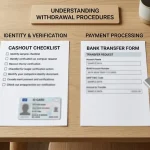
Financial checks are another separate condition. Online gambling operators commonly assess a customer’s identity before allowing financial transactions. Completing such a check would address identity and account requirements; it would not prove that a payment method is supported or that a particular game is available. These are separate decisions, even when a site presents them together.
There is also a consumer-protection distinction. Australian consumer law does not protect players using offshore casinos. That exposure is not reduced by a familiar payment name, a polished game menu or an identity check. Each feature answers a different question, and none substitutes for the legal status of the service.
Accordingly, a BPAY payment claim should not be read as evidence of BPAY-linked games, and a game listing should not be read as evidence of BPAY support. In the Australian context, neither claim makes prohibited real-money online casino services lawful.
Contactless card payments are part of everyday commerce across Australia: credit and debit cards are accepted almost everywhere. Mobile wallets, including Google Pay and Apple Pay, have similarly broad acceptance. Consumers are also comfortable moving between cards, mobile wallets and bank-linked services such as PayPal. That familiarity describes general payment behaviour, not the cashier arrangements of a particular gambling site.
Australians frequently use contactless credit and debit cards, mobile wallets such as Google Pay and Apple Pay, and bank-linked services like PayPal for everyday commerce.
The distinction matters because acceptance depends on the merchant and the transaction, not simply on what Australians commonly use elsewhere. A payment method can be widespread in shops and still have no confirmed role at an online casino. The same applies to BPAY: the presence of bank-linked payment services in Australian consumer habits does not establish that a casino offers BPAY, or that a payment labelled as bank-related uses BPAY’s actual system.
Payment availability is also separate from the legal status of the service. Under the Interactive Gambling Act 2001, operators are prohibited from providing real-money online casino games to people in Australia. The Australian Communications and Media Authority enforces that law. Players are not criminally liable simply for using an offshore casino, but Australian consumer law does not protect people who do so. Familiar payment options do not change those conditions or provide the protections associated with ordinary domestic purchases.
For a financial comparison, the relevant evidence is specific to the merchant and the method: whether the option is actually displayed, what terms apply, and whether the transaction is permitted. Broad acceptance of cards or mobile wallets cannot fill in those details for BPAY. Nor can the popularity of a bank-linked service be treated as evidence that it is interchangeable with another one.
The practical conclusion is narrow. Australia’s payment culture includes cards, wallets and bank-linked services, with wide acceptance for some everyday options. That market context may explain why several payment methods feel familiar; it does not verify casino availability. Familiarity is not a payment term.
A deposit route does not, by itself, establish a payout route. A casino may accept a payment method for funding an account yet handle withdrawals differently. For BPAY, acceptance as a deposit option would therefore not prove that winnings could be returned through BPAY. The withdrawal terms need to identify the method and any conditions attached to it.
A specialist review reports that some casinos may refuse withdrawals to Amex or apply an additional fee. The same type of review notes that Amex withdrawal access is not available at every Australian-facing casino it discusses. These are operator-specific terms, not a basis for assuming that another method follows the same rules. In particular, they do not establish whether a BPAY withdrawal is available, how it would be processed or whether a fee would apply.
The relevant distinction is between a payment method shown at deposit and one expressly permitted for withdrawals. If the cashier or terms describe only deposits, that description settles only the funding side. A payout method, eligibility conditions and any charges need to be stated separately; otherwise, the route from account balance to payment remains unresolved.
Australian law adds a separate issue. The Interactive Gambling Act 2001 prohibits operators from providing real-money online casino games to people in Australia. The Australian Communications and Media Authority enforces the Act, while players are not criminally liable merely for using an offshore casino. Australian consumer law does not protect players who use offshore casinos, so an apparent payment option does not supply local consumer recourse if a payout is disputed.
Accordingly, a claim about BPAY deposits cannot be treated as confirmation of BPAY withdrawals. The two permissions concern different stages of a transaction, and each requires its own explicit terms.
A payment method’s name is not evidence that it is available at a particular casino. BPAY acceptance, where claimed, would need to be confirmed in the operator’s own current terms; it cannot be inferred from a general description of payment options. The same applies to charges, transaction handling and whether a payment can be reversed. Those details belong to the named method and operator, not to a broad label such as “bank payment”.
Amex illustrates the distinction. A specialist review reports that some online casinos do not accept it, and that an Amex payment may be declined if the card provider blocks transactions to a particular website. The review also describes gambling transactions as having no fee while noting that withdrawal fees can depend on the bookmaker. None of those points establishes a BPAY rule. A fee statement about Amex cannot be carried across to BPAY, and a card restriction says nothing about a bank-linked payment service.
That separation matters when comparing a claimed BPAY option with other methods. A casino cashier may list different routes under different conditions; one method’s availability does not establish another’s, and one method’s cost or processing treatment does not set the terms for the rest. A BPAY claim without method-specific terms leaves the practical cost and payment conditions unresolved. No fee or timing should be assumed from the payment name alone.
There is also a legal boundary in Australia. The Interactive Gambling Act 2001 prohibits operators from providing real-money online casino games to people in Australia. Australian consumer law does not protect players who use offshore casinos. Payment terminology does not alter either point, nor does it establish that a casino service is lawful or available to Australian residents.
The useful distinction is narrow: BPAY acceptance must be expressly stated for the relevant service, while fees and transaction conditions must be stated for BPAY itself. Amex terms are not a substitute. Without those specific terms, a claim that an online casino can be paid through BPAY remains unconfirmed, not a basis for calculating the cost of a transaction.
A game catalogue and a cashier answer different questions. A site may describe its entertainment, while the cashier sets out the payment methods available for account transactions. Mention of a particular game does not show that BPAY can be used to fund play; a payment logo or option, on its own, says nothing about which games are offered.
That distinction matters in searches for online slots that accept BPAY. The wording joins a game category to a payment method, but each needs separate confirmation. A claim about BPAY acceptance would need to identify the operator’s cashier terms, while any statement about game access would need to be checked independently. One cannot be inferred from the other.
There is also a separate legal issue in Australia. Under the Interactive Gambling Act 2001, providing real-money online casino games, including slots, to people physically located in Australia is illegal for operators. The Australian Communications and Media Authority enforces the Act. Australian consumer law does not protect people using offshore casinos, so a payment description should not be mistaken for a safeguard or endorsement.
The financial calculation is straightforward: payment availability concerns how an account may be funded; game availability concerns what the service offers; legality concerns whether the operator may provide that service in Australia. Those are separate conditions, and satisfying one does not settle the others. A BPAY reference attached to a game category cannot establish all three.
Jackpot City Casino, Spin Palace and Ruby Fortune are among the Australian gambling sites listed as accepting Amex. Ignition Casino, Joe Fortune and PlayAmo also support Amex deposits for Australian players.
Check the casino cashier for American Express as a deposit option. If it is available, you can select it, enter your card details and deposit amount in AUD, and submit the payment.
Yes, Amex casino deposits are processed instantly. Withdrawals to Amex can take up to five days to clear.
Yes, some Australian online casinos accept Amex deposits, although acceptance is not universal. A payment may also be blocked by Amex or the card issuer.
Amex deposits typically have no fee, but a casino may charge a surcharge, and currency conversion fees can apply. Withdrawals may also incur a fee.
Amex deposits are processed instantly.