BCH payment support does not confirm that deposits and withdrawals both work or that an offshore casino can lawfully offer games in Australia.

Bitcoin Cash, commonly abbreviated as BCH, is a payment method, not a category of casino licence or a separate legal status. A site describing itself as a Bitcoin Cash online casino is making a claim about how it handles deposits or payouts. That wording alone does not establish that BCH is accepted for both directions, that a payment will be credited to a player account, or that the service may lawfully offer online casino games to people in Australia.
Those are separate questions. Payment support concerns the operator’s systems and terms; Australian law concerns the operator and the service being offered. Treating one as proof of the other confuses a transaction method with permission to provide gambling.
The Interactive Gambling Act 2001 does not specifically name Bitcoin or cryptocurrency. Its focus is instead on operators and certain types of online casino games offered to Australian residents. In other words, replacing a card payment with a crypto transfer does not change the legal character of the game or make the operator’s obligations disappear. The payment rail is not a legal workaround.
Choosing a Bitcoin Cash casino in Australia calls for checking the details that matter to your play, such as available payment information and licensing. Use these brief verdicts as a starting point, and confirm BCH availability and terms with each casino before depositing.
Bizzo Casino
Bizzo Casino is listed with a license from the Curacao Gaming Control Board, held by TechSolutions Group N.V. This is the licensing information provided for the operator.
Kingmaker
Kingmaker lists crypto payouts at around 90 minutes and fiat payouts at 1–5 days. Its minimum deposit is A$30.
Vegaz Casino
Vegaz Casino lists Curacao license OGL/2024/1335/0780. Its minimum deposit is EUR 20.
JeetCity Casino
JeetCity Casino is listed with a Curacao eGaming license held by Dama N.V. This is the licensing detail available for the operator.
Thor Casino
Thor Casino lists a Curacao license from Antillephone N.V., with Versus Odds B.V. identified. Its minimum deposit is EUR 20.
LevelUp Casino
LevelUp Casino lists Curacao eGaming license OGL/2023/174/0082, held by Dama N.V. Its minimum deposit is A$15.
LuckyVibe
LuckyVibe is listed with a Curacao Gaming Control Board license, OGL/2023/176/0095, held by Hollycorn N.V. This is the licensing information provided.
JustCasino
JustCasino is listed with a Curacao Gaming Control Board license. No further operator details are provided here.
Ricky Casino
Ricky Casino lists crypto payouts under 1 hour and PayID payouts at 1–3 business days. The minimum deposit is A$20, or A$30 to qualify for the bonus.
Wild Tokyo
Wild Tokyo lists a Curacao license, crypto payouts in 30–60 minutes, and fiat payouts in 1–5 days. Its minimum deposit is A$10.
That distinction matters when the phrase “Bitcoin Cash casino in Australia” is used. It can describe a site that accepts BCH from someone located in Australia, but it does not mean the site is an Australian-licensed casino. Australia does not provide a domestic licence for online casino games. A coin’s presence in a cashier, where offered, should not be read as evidence of local regulatory approval.
“Accepts Bitcoin Cash” can refer to different points in a payment process. A site might show BCH as a deposit option but not support BCH withdrawals. It might accept a transfer only through a particular network or wallet format. It might display a payment option that is unavailable for some accounts or jurisdictions. These are operational distinctions, not details that can be inferred from the words “crypto casino.”
A meaningful claim would need to identify BCH specifically and explain whether it applies to deposits, withdrawals, or both. Bitcoin and Bitcoin Cash are distinct assets; selecting one does not automatically send the other. A casino online payment page that lists Bitcoin cannot therefore be treated as proof that it accepts Bitcoin Cash. Nor does general information about cryptocurrency payments establish that a particular operator supports BCH.
 Casinos That Accept CashToCode in AustraliaLearn why widespread card and mobile-wallet use does not confirm CashToCode acceptance, and how to distinguish general payment habits from casino-specific evidence.
 Casinos That Accept PayPal in Australia: Key LimitsLearn why PayPal familiarity does not confirm casino support, how deposits differ from withdrawals, and what the Interactive Gambling Act 2001 says.
This is especially important because payment errors can be final. Cryptocurrency transfers are generally irreversible; a transfer sent to the wrong address or through an unsupported network can result in permanent loss of funds. Cryptocurrency prices can also move between the time a deposit is valued and the time it is used or withdrawn, changing its value in Australian dollars. A displayed coin balance is not necessarily a fixed Australian-dollar amount.
Searches for a BCH casino may combine a payment preference with an interest in online pokies, table games, or live dealer formats. Those are not the same thing. Bitcoin Cash describes the proposed means of transferring value. Pokies or live casino games describe the gambling service. Neither the game label nor the payment label answers whether the service may be offered to people in Australia.
The legal focus on operators also explains why cryptocurrency does not create a special category of online casino that sits outside the rules. The Act’s treatment of covered online casino games does not depend on whether the account is funded in Australian dollars, Bitcoin, or Bitcoin Cash. The relevant distinction is not “fiat versus crypto”; it is the nature of the service and the operator providing it.
For the same reason, a “live Bitcoin Cash casino” is not a distinct legal product simply because a live dealer and a crypto payment are presented together. It remains an online casino service with a payment method attached. Any claim about BCH availability must be assessed separately from the legal status of the gambling service.
Legal Status
Cryptocurrency transfers are not a legal workaround; using BCH does not make an offshore operator authorized to provide online casino games in Australia.
The practical scope of BCH information is therefore narrow. It can establish what a cashier claims to accept and what conditions apply to that payment route. It cannot establish that every crypto casino supports BCH, that Bitcoin support includes Bitcoin Cash, or that a casino is authorised to offer real-money games to Australians. Those distinctions keep payment terminology from being mistaken for proof of either functionality or legality.
A Bitcoin Cash casino offer is not a single price. Its value depends on whether the service can lawfully reach Australian residents, whether BCH is supported for both deposits and withdrawals, and what conditions attach to any advertised bonus. A polished cashier or a large headline offer does not settle any of those points.
Crypto casinos do not hold Australian licences and sit outside Australia’s domestic regulatory framework. The Australian Communications and Media Authority works to block unlicensed offshore gambling sites, so availability on a screen should not be mistaken for local approval or stable access. A cryptocurrency payment method does not change the operator’s status.
The Interactive Gambling Act places the prohibition on operators providing online casino games to people in Australia. An offshore licence, if an operator holds one, is not an Australian licence and does not make the service locally authorised. The practical comparison therefore cannot begin with a “best” label: it begins by recognising the legal and access limits that apply in this market. Using a VPN to get around geographic restrictions can breach a platform’s terms and put an account or balance at risk; it is not a sound way to resolve the access issue.
A site that accepts Bitcoin Cash for deposits may not support BCH withdrawals. That distinction determines whether the chosen coin can carry funds both into and out of an account, rather than serving only as a one-way payment option. Withdrawal support for the exact coin should be confirmed in the payment terms before any deposit. If the return route requires another asset or payment method, conversion costs and price movements can alter the amount ultimately received.
Network selection matters as well. The sending wallet and the casino’s stated network must match; a transfer to the wrong address or network may be irrecoverable. Crypto transactions cannot simply be reversed through a card issuer, so an address error can mean permanent loss. BCH prices can also move between deposit and withdrawal, changing the Australian-dollar value of either amount even when the number of coins is unchanged. That exposure is part of the cost, not a feature that makes a payment safer.
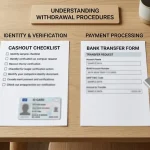
Account verification belongs in the same assessment. Identity documents must be provided before withdrawals can be processed. A payment route that looks straightforward at deposit can still leave a balance unavailable until verification is complete. The relevant terms are therefore the stated BCH withdrawal support, the required verification, and any conditions that can prevent or delay a payout—not merely the deposit button.
A bonus headline has no usable value by itself. Its conditions may include wagering requirements, restrictions on eligible games, a maximum cashout, or exclusion of particular payment methods. If BCH deposits are excluded from a promotion, or winnings from restricted games do not contribute as expected, the advertised amount cannot be treated as cash available for withdrawal.
The comparison should use the bonus rules as a whole: what must be done before funds become withdrawable, which play counts, what can be cashed out, and whether the payment method qualifies. Where any term is unclear, the offer’s value cannot be reliably calculated.
Self-exclusion status also affects whether an offer is appropriate at all. Anyone registered with BetStop or a state-based self-exclusion program must self-exclude directly with each offshore platform; registration in Australia does not automatically apply there. That is an access condition, not a promotional footnote.
A useful review of an online casino accepting Bitcoin Cash therefore records three separate findings: the Australian regulatory position, confirmed BCH withdrawal availability, and the net effect of the offer’s conditions. If one remains unresolved, the offer cannot be treated as a complete or comparable proposition.
A casino balance held in cryptocurrency can involve two different tax questions: whether gambling winnings are taxable, and whether a later change in the cryptocurrency’s value creates a capital gain. These are separate events. Treating them as one outcome can make the tax position look simpler than it is.
The Australian Taxation Office generally treats gambling winnings earned by recreational players as windfalls rather than income. On that basis, recreational winnings are generally not taxable. The label “casino winnings” does not, by itself, make the amount ordinary assessable income.
That treatment does not mean cryptocurrency moving through a gambling account is automatically outside tax rules. The ATO treats cryptocurrency as an asset for capital gains tax purposes. A later sale at a higher value can therefore create a separate CGT issue, even where the gambling return itself is generally not taxable.
Consider the sequence: BTC is bought, deposited at a casino, withdrawn as winnings and later sold for more than its relevant cost. The gambling winnings and the price increase are not the same thing. The ATO’s treatment distinguishes the recreational gambling windfall from the gain on the cryptocurrency when it is eventually sold. The latter price gain is subject to CGT.
The distinction matters because the amount that came from gambling is not necessarily the amount of any later capital gain. If the coin’s market value changes after withdrawal, the eventual sale price may differ from its value at the earlier point. A tax calculation focused only on the casino result would miss that separate movement in value.
For Bitcoin Cash, the practical question is likewise not limited to whether a casino account displays a BCH balance. Cryptocurrency is treated as an asset for CGT purposes, so a later sale at a profit may have tax consequences. The precise calculation depends on the relevant acquisition and disposal values and the transaction history; the gambling label does not erase the asset’s price movement.
Tax Distinction
The ATO distinguishes between recreational gambling winnings, which are generally not taxable, and capital gains from the subsequent sale of cryptocurrency assets.
Records should make the timeline legible: when the cryptocurrency was acquired, what it cost, when it was used or received, and what it was worth when later sold. Transaction records and wallet history can help distinguish a gambling result from a subsequent change in the coin’s value. Without that separation, a single balance can conceal two different financial events.
Price volatility makes the distinction more than a filing technicality. A deposit may be valued in one market condition and a withdrawal sold in another. A nominally unchanged number of coins can represent a different amount of Australian dollars over time. A gain in coin value can create a CGT question; a fall can change the outcome of the asset calculation. Neither movement reclassifies recreational gambling winnings as income.
The same reasoning applies when comparing a BCH deposit with a BTC deposit: the payment coin does not turn the gambling result and the asset result into one tax category. The relevant distinction is between the recreational windfall and any capital gain on cryptocurrency later sold at a profit. A bonus, game choice or displayed account balance does not settle that distinction; the transaction sequence and values do.
For tax planning, the useful comparison is therefore not simply “how much was won?” It is also “what happened to the coin after it was received?” The first question concerns the general treatment of recreational gambling winnings. The second concerns a cryptocurrency asset and its later disposal. Keeping those questions separate produces a cleaner account of the financial result—and avoids treating a profitable sale as though it were merely part of the original casino payout.
A Bitcoin Cash casino deposit bonus is not a cash addition with an unconditional value. Its practical worth depends on the rules attached to it: wagering requirements, eligible games, withdrawal caps and payment-method exclusions. A welcome offer or a no-deposit promotion should be assessed on those terms, not on its headline amount. No particular bonus amount or condition can be assumed to apply across casinos.
Wagering requirements determine how much qualifying play must take place before bonus-related funds or winnings become withdrawable. The requirement may apply to the bonus, the deposit, or both; the distinction changes the amount of play needed to meet it. Terms should also clarify when the requirement starts and which bets count. Without those details, the displayed offer cannot be translated into a reliable cash value.
Game restrictions affect whether the required play can be completed as expected. A promotion may exclude some games or count them differently towards wagering. References to Bitcoin Cash video slots or other online slots do not establish that those games qualify for a particular offer. The bonus rules, rather than the payment coin or game label, determine eligibility.
A cashout cap can limit the amount withdrawable from bonus play, even when the wagering condition has been met. The cap should be read alongside any distinction between the original deposit and bonus-derived winnings. If the maximum cashout is lower than the amount otherwise accumulated, the excess has no practical withdrawal value under that offer.
Payment exclusions matter particularly where the promotion is advertised as a Bitcoin Cash casino welcome bonus. The terms may exclude cryptocurrency deposits, or may exclude a specific coin, from bonus eligibility. A casino accepting BCH for deposits does not thereby promise a bonus for BCH payments. The payment method used to fund an account may also affect whether a promotion can be claimed at all. Where terms are unclear, the offer’s value cannot safely be calculated in advance.
The transfer itself does not settle eligibility. A specialist review describes deposits as being sent from a personal cryptocurrency wallet to an address supplied by the casino, with withdrawals requested to a wallet address. That account of the process is not a guarantee that BCH is supported for either direction, or that a deposit qualifies for a promotion. The casino’s current terms need to identify the supported coin and the bonus treatment of that payment method. Crypto transfers are irreversible; sending funds to the wrong address or network can cause permanent loss.
A “no-deposit” label also does not mean unrestricted cash. Wagering, game exclusions and cashout limits can still govern whether any resulting balance is withdrawable. Free Bitcoin Cash slots or a no-deposit Bitcoin Cash promotion should not be treated as cash value unless the applicable conditions are clear.
These promotional conditions do not change the legal position. Australian law prohibits operators from offering real-money online casino games to people in Australia; an offshore licence is not an Australian licence. People registered with BetStop or a state-based self-exclusion program must self-exclude directly at each offshore platform.
Australian law draws a distinction between the person using a gambling service and the business supplying it. Under the Interactive Gambling Act 2001, the restriction is directed at operators: they cannot offer online casino games to people in Australia under an Australian licence. Australia does not issue a domestic licence for online casino games, so an offshore permit is not an Australian authorisation.
The Act covers online casino-style games provided to Australian residents, including slots, poker, blackjack and roulette. The relevant issue is the service being offered to people in Australia, not whether the operator describes itself as a casino, crypto casino or mobile casino. Changing the payment method to Bitcoin Cash does not change that legal boundary. A casino that accepts BCH does not acquire a domestic licence by accepting it.
For players, the position is different. The prohibition on providing the service is not a general offence imposed on an Australian merely for using an offshore-licensed casino. That distinction does not make the operator’s offer lawful in Australia, nor does it establish that a particular site is authorised to serve Australian residents. An offshore licence may relate to the operator’s obligations in another jurisdiction; it does not replace a local licence, which Australia does not issue for online casino games.
Attention An offshore licence is not an Australian licence and does not make an online casino service locally authorised.
This matters when evaluating claims about an online casino that accepts Bitcoin Cash. Payment availability and legal status are separate questions. A deposit option can indicate that a site processes a particular cryptocurrency, but it says nothing about whether the operator may lawfully offer casino games to people located in Australia. The same applies when a site works on a phone or labels itself an offshore casino.
The practical distinction is narrow but important: Australian law targets the entity supplying the prohibited online casino service, while the stated prohibition does not make a player’s use of an offshore site a crime. It is therefore inaccurate to describe a crypto casino as licensed or regulated in Australia simply because it holds an offshore licence or accepts Australian customers. It is equally inaccurate to treat the absence of player liability as approval of the service.
For any Bitcoin Cash casino test, the legal question should not be collapsed into a payment check. BCH support concerns the payment channel; it cannot change the operator’s obligations under the Interactive Gambling Act. A site’s claims about its licence and its ability to accept deposits do not establish an Australian right to provide online casino games. The currency is not a legal workaround; it is only a means of transfer.
A casino’s game catalogue and its payment options are separate things. A site may describe games as available for cryptocurrency play without establishing that Bitcoin Cash (BCH) can be used to fund them. The relevant check is whether the payment terms name BCH for deposits and withdrawals, not whether the site accepts another coin or displays a general crypto-payment option.
That distinction also applies to claims about a “Bitcoin Cash casino game” or BCH pokies. The game itself does not run on the Bitcoin Cash network; the coin is a payment method, if the operator supports it. A game catalogue therefore cannot prove BCH support, and a general statement about crypto payments cannot prove that a particular title can be played using BCH. No coin-specific conclusion should be drawn from the presence of casino games alone.
Network characteristics differ between cryptocurrencies, but comparisons involving Bitcoin, Litecoin and Ethereum do not establish how BCH is handled by a casino. A specialist review has reported that Bitcoin confirmations may take longer than Litecoin or Ethereum confirmations. Another specialist review describes Litecoin as widely accepted across crypto casinos and as having lower network fees than Bitcoin or Ethereum. Those are claims about the named coins, not evidence that a casino accepts BCH.
Fees also vary with network conditions. A specialist review has reported that Ethereum fees can exceed Bitcoin fees during busy periods, while another has described Bitcoin fees as potentially reaching AUD 10–20 per transaction at peak times. These are time-sensitive observations, not fixed charges or a forecast for a particular transfer. Neither can be applied to BCH: its fee, confirmation handling and casino crediting rules need coin-specific terms.
Confirmations may take longer than other coins; fees can reach AUD 10–20 during peak times.
Widely accepted across crypto casinos and generally has lower network fees than BTC or ETH.
Fees can exceed Bitcoin fees during periods of high network congestion.
The useful comparison is therefore not “crypto accepted” versus “crypto rejected”. It is whether BCH appears explicitly in the cashier, whether the same coin is supported for withdrawals, and whether the operator specifies the network and any conversion or processing charges. If BCH is absent from those terms, acceptance of Bitcoin, Litecoin or Ethereum does not fill the gap. The distinction matters before a deposit: crypto transactions are irreversible, so a transfer to the wrong address or network can result in permanent loss. Cryptocurrency prices can also move between deposit and withdrawal, changing the value of the balance independently of the game result.
Terms such as “anonymous Bitcoin Cash casino” do not establish that play is anonymous or that identity checks can be avoided. Identity documents are required before withdrawals can be processed. Nor does a BCH payment option establish that a casino is authorised to provide real-money games in Australia. Payment capability answers a narrow operational question; it does not resolve the separate legal status of the service.
For Australian readers, the sensible conclusion is limited: BCH-specific support must be confirmed in the operator’s own payment terms, and information about other coins is not a substitute. A catalogue of games, a crypto label or a bonus banner cannot make that evidence more specific than it is.
A crypto payout has separate stages: the casino reviews and approves the request, sends a transaction to the blockchain, and the receiving wallet records it. The time shown for one stage is not the full withdrawal time. A pending casino review cannot be shortened by faster network confirmations, and a completed casino approval does not mean the funds have reached the wallet.
A specialist review reports that casino-side processing added 12–48 hours before a Bitcoin payout was sent. The same type of review describes Bitcoin withdrawals reaching a personal wallet within an hour after the casino had processed them. These are reported timings, not service standards: the operator’s checks, current workload and network conditions can change the result. They are Bitcoin examples, not a forecast for Bitcoin Cash. A casino’s BCH withdrawal support and its own processing terms need to be confirmed before any deposit; accepting BCH for deposits does not establish that it can pay out in BCH.
After a transaction is sent, blockchain confirmation is a separate variable. A specialist review gives a Bitcoin confirmation time of 10–60 minutes, depending on network congestion and the fee paid. Specialist reviews also report casinos requiring 1–3 confirmations before crediting funds. Neither figure establishes how quickly a Bitcoin Cash transaction will be confirmed or how many confirmations a particular operator will require. The relevant coin, network and casino policy must match; a Bitcoin estimate cannot safely be carried over to BCH.
Identity checks can delay a payout before it reaches the network. Identity verification documents must be provided before withdrawals can be processed. If a casino requests documents at the withdrawal stage, the review and approval period comes before the blockchain timeline. A displayed transaction status therefore needs to be read carefully: a request awaiting identity checks has not yet been broadcast, while a transaction awaiting confirmations has already entered the network.
Withdrawal Process
Casino Review
The operator reviews and approves the request, a process that can take 12–48 hours.
Blockchain Broadcast
The casino sends the transaction to the blockchain network.
Network Confirmation
The transaction awaits the required number of confirmations (often 1–3) before reaching the wallet.
The amount received also remains exposed to cryptocurrency price movement. If the coin’s value changes between withdrawal and conversion, the value in Australian dollars can differ from the amount expected when the payout was requested. Network fees may also affect the net amount received. These costs and price changes are distinct from the casino’s processing time.
Crypto transfers are irreversible. A payout sent to an incorrect wallet address or incompatible network may be permanently lost, so address and network details require checking before a withdrawal is confirmed. A fast-withdrawal label does not remove those risks or establish that BCH withdrawals are available. The useful measure is the complete path from identity approval to casino dispatch and then blockchain confirmation—not a single advertised time for a different coin.
A cryptocurrency deposit begins in the wallet, not on the casino screen. A specialist review describes the process as sending coins from a personal wallet to the deposit address supplied by the platform. For Bitcoin Cash, that distinction matters: a general claim about crypto payments does not establish that a particular service accepts BCH. The selected coin must be supported for deposits and withdrawals before any transfer is made.
The address and network need to match the instructions shown for the transaction. A copied address should be checked before sending; cryptocurrency transfers are irreversible, and a mistake can mean permanent loss of funds. The same applies to network selection. A casino’s deposit instructions must specify the compatible network, and the wallet must send through that network. A correct coin sent by an incompatible route is not a recoverable shortcut.
After submission, the transfer is recorded on the blockchain. A specialist review reports that some offshore casinos credit Bitcoin deposits after blockchain confirmations. That is not a guarantee of how a BCH deposit will be handled: confirmation rules and crediting procedures depend on the platform and the coin it supports. The account balance should not be treated as settled merely because the wallet shows a transaction as sent.
The same type of review describes some casinos as allowing play once a deposit is detected, before it has received full confirmation. This is an operator-specific arrangement, not a standard feature. If a balance appears early, the underlying transfer may still be awaiting confirmation. Spending against an unconfirmed credit can leave the account subject to the platform’s own settlement process.
The transfer itself does not remove the need for account checks. Identity documents must be provided before a withdrawal can be processed. A casino may therefore show funds in an account while the ability to cash out remains conditional on verification. Deposit status, account balance, and withdrawal eligibility are separate stages.
Crypto value also moves independently of the account display. The amount of BCH sent can change in Australian-dollar value while held, affecting the practical value of a deposit or any later winnings. A balance denominated in coins is not a fixed Australian-dollar amount.
Finally, a casino session does not change the Australian legal position. Real-money online casino games are prohibited when offered to people in Australia under the Interactive Gambling Act 2001. A crypto wallet, fast detection, or an offshore interface does not create permission to provide those games locally.
Bitcoin Cash does not change the legal status of real-money online pokies. Under the Interactive Gambling Act 2001, providing online casino-style games, including slots, to people in Australia is prohibited. The rule concerns the service being offered, not whether a deposit is made in Australian dollars, Bitcoin Cash or another payment method.
That distinction matters when a site presents itself as a Bitcoin Cash casino or displays games that appear available to Australian visitors. A payment option does not establish that the operator may lawfully provide those games in Australia. Nor does a label such as “licensed” establish that the site holds an Australian online casino licence: Australia does not issue a domestic licence for online casino games.
Searches for BCH slots may return pages describing game access or payment support. Those claims do not remove the legal restriction. A site’s willingness to accept a transfer is separate from whether offering real-money slots to Australian residents is permitted. Offshore licensing also does not create an Australian authorisation to provide prohibited casino games.
The restriction applies to online casino-style games such as slots whether the game is accessed through a browser or another online format. It is therefore misleading to treat Bitcoin Cash slots as a distinct legal category. The currency can describe a payment method; it does not change the character of the gambling service.
Australian law targets the operator providing the prohibited service. It does not make an individual player’s use of an offshore casino a criminal offence. Even so, that distinction does not turn an offshore site into a locally authorised venue, and online access may be blocked by the regulator.
For a financial decision, the relevant boundary is not whether a site accepts BCH or advertises a particular slot catalogue. It is that real-money online slots offered to people in Australia fall within the prohibition on online casino-style games.
A live dealer changes how a table is presented, not the legal category of the service. The game is streamed online, players make decisions through a digital interface, and wagers are handled remotely. A human dealer on screen does not turn online casino play into a separate, exempt activity.
The Interactive Gambling Act 2001 prohibits operators from providing online casino-style games to people in Australia. Its stated scope includes games such as blackjack and roulette, alongside poker and slots. A live version remains an online casino game; the presence of a studio, cards, a wheel or a dealer does not remove it from that scope.
The same distinction applies to payment. A table described as accepting Bitcoin Cash would still be an online casino service if real-money casino play is offered to Australian residents. The use of BCH does not create a domestic casino licence or change the treatment of the underlying game. The Act does not need to name a particular cryptocurrency for its restrictions on casino services to apply.
Claims about a live dealer Bitcoin Cash casino therefore involve two separate questions: whether the service accepts BCH for deposits and withdrawals, and whether offering the game to people in Australia is lawful. A payment badge or cashier option can address only the first. It is not evidence that the operator may lawfully provide live casino games in Australia, nor does it establish that BCH is supported for both directions of payment.
For Australian residents, the live format is not a loophole in the online casino restriction. Dealer visibility is a presentation feature; the legal issue remains the provision of real-money casino-style games online.
The Interactive Gambling Act prohibits operators from offering covered online casino games to people in Australia, regardless of whether they accept Bitcoin or other crypto. Playing at an offshore casino is not itself illegal for Australian players, but crypto casinos are not licensed in Australia.
Gambling winnings are generally treated as windfalls and are not taxable for recreational players. However, cryptocurrency is subject to capital gains tax: if you later sell withdrawn crypto for more than it cost you, the gain may be taxable.
Yes, crypto casinos may offer real-money games and allow withdrawals to a crypto wallet. The value of a crypto balance in Australian dollars can change as prices move.
A VPN may breach a platform’s terms and put your account or balance at risk. It does not change the legal status of the casino or make an offshore service locally authorised.
The Interactive Gambling Act prohibits operators from offering covered online casino games, such as slots, poker, blackjack and roulette, to Australian residents. Australian players are not themselves prohibited from playing at offshore casinos, but those casinos are not licensed in Australia.