Encryption and account controls do not establish that an online casino can legally offer real-money games to Australians or guarantee withdrawals.

A secure connection and a lawful service are separate questions. For Australian residents, the legal position comes first: the Interactive Gambling Act 2001 bars operators from offering online casino games to people in Australia. That includes online slots and table games such as blackjack. A site’s use of encryption, identity checks or a polished account interface cannot change the status of the service it provides.
This distinction matters when assessing claims about a secure online casino in Australia. Security language often describes how a website handles an account or transaction. It does not establish that the operator may legally provide real-money casino gambling to Australians. A technical control can be genuine while the underlying service remains prohibited. Treating those points as interchangeable would turn a narrow security claim into a legal endorsement it does not support.
The restriction is directed at operators, not framed as a criminal offence for an individual who uses an offshore casino site. The Act does not explicitly make individual players criminally liable simply for using such a site. That is a limited statement about the law’s treatment of players; it is not approval of offshore play, a guarantee of access, or a promise that a player will recover money if a dispute arises.
Choosing a secure online casino in Australia means checking what verifiable information is available before you deposit. This list gives you a concise reference point, including licensing details and payment information where provided.
Bizzo Casino
Bizzo Casino is listed with a Curacao Gaming Control Board license held by TechSolutions Group N.V.
Kingmaker
Kingmaker lists crypto payouts at around 90 minutes and fiat payouts at 1–5 days. Its minimum deposit is A$30.
Vegaz Casino
Vegaz Casino lists a Curacao OGL license, number 2024/1335/0780, and a minimum deposit of EUR 20.
JeetCity Casino
JeetCity Casino is listed with a Curacao eGaming license held by Dama N.V.
Thor Casino
Thor Casino lists a Curacao license from Antillephone N.V. for Versus Odds B.V. Its minimum deposit is EUR 20.
LevelUp Casino
LevelUp Casino lists a Curacao eGaming OGL license, number 2023/174/0082, held by Dama N.V. Its minimum deposit is A$15.
LuckyVibe
LuckyVibe lists a Curacao Gaming Control Board OGL license, number 2023/176/0095, held by Hollycorn N.V.
JustCasino
JustCasino is listed with a Curacao Gaming Control Board license.
Ricky Casino
Ricky Casino lists crypto payouts in under an hour and PayID payouts in 1–3 business days. Its minimum deposit is A$20, or A$30 to qualify for the bonus.
Wild Tokyo
Wild Tokyo lists a Curacao license, crypto payouts in 30–60 minutes, and fiat payouts in 1–5 days. Its minimum deposit is A$10.
The operator’s position is different. A business offering online casino games to people in Australia is providing a service that the Act prohibits. The fact that a website is based overseas or refers to an offshore licence does not make it an Australian-authorised casino. Nor does a foreign licence replace the Australian legal position. The relevant issue is whether the service may be offered to people located in Australia, not how its operator describes its status elsewhere.
ACMA is Australia’s primary regulator for online gambling. Its role is relevant to the distinction between a website’s security features and its standing in the Australian market. A casino’s own claims are not a substitute for the legal framework or the regulator’s role. In particular, an offshore casino should not be presented as a lawful Australian real-money option merely because it accepts Australian visitors, displays familiar payment methods or describes itself as secure.
The phrase “most secure online casino” can therefore suggest more than the available legal position supports. It may sound like a comparison among lawful local casinos, but online casino games cannot be offered to Australian residents under the Act. A comparison of technical features cannot create a category of legally permitted real-money casino operators where the law prohibits the service. Security terminology does not supply a local licence or override the prohibition.
 NetEnt Casinos in Australia: Slots, Bonuses and PlayLearn how NetEnt slot catalogues, demo play and free-play promotions differ, and why bonus wagering conditions matter before a withdrawal.
 Novomatic Casinos in Australia: Games and LegalityLearn what Novomatic casino listings can and cannot confirm, how bonuses are calculated, and why offshore sites are not locally licensed in…
Practical access is also not proof of legality. An offshore website appearing online, or being reachable at a particular moment, does not establish that it is authorised to serve Australians. Access to offshore casino services is subject to active enforcement and blocking. Using a VPN to try to reach a blocked casino may lead to account closure, voided winnings or loss of a deposit. The apparent ability to open a site is therefore a poor test of whether using it is lawful or financially sound.
The absence of explicit criminal liability for an individual player should not be stretched into a claim that the arrangement is protected. It means the law distinguishes the operator’s prohibited conduct from the player’s position; it does not turn an offshore service into a regulated Australian casino. If an operator refuses a withdrawal or closes an account, the fact that the player was not explicitly criminalised does not itself provide a remedy. Legal status and practical recourse are separate questions.
For that reason, “secure casinos” is not a useful legal category on its own in Australia. A website may make claims about safeguards, but those claims address a different layer from whether real-money casino games may be offered to Australians. A secure-looking account is not evidence of Australian authorisation, and an offshore licence does not confer that status. The legal position remains the first filter; technical security cannot reverse it.
A site can look orderly, accept deposits and display security language without offering an Australian player the protections attached to a lawful local real-money casino service. The distinction matters most when money is disputed. A polished account page is not a promise that a withdrawal will be honoured, and an offshore licence is not an Australian licence.
Financial Risk
An offshore casino is not a protected Australian real-money option, and users may have limited practical recourse if an operator freezes an account or withholds winnings.
For an Australian resident, an offshore casino remains an offshore service, not a protected Australian real-money option. The Interactive Gambling Act 2001 does not make individual players criminally liable for using such a site, but that does not convert the service into a locally regulated one. The absence of player liability and the presence of consumer protection are separate questions. Treating them as the same thing is an expensive accounting error.
If an offshore operator freezes an account, withholds winnings or closes access while a balance remains, the player may have limited practical recourse. The operator is not providing a lawful Australian casino service, and Australian laws may not assist in recovering money from an unlicensed gambling service. A complaint can still be made through available channels, but making a complaint is not the same as having an enforceable local route to repayment.
Distance and jurisdiction complicate the calculation. The operator may be based outside Australia, its terms may name a foreign governing law, and the account relationship may be managed beyond the reach of an Australian consumer process. Even where a dispute appears clear from the account history, obtaining a decision and turning that decision into payment are different steps. There is no sound basis for counting a displayed balance as recoverable cash until it has actually been received.
This exposure is not limited to winnings. Deposited funds can also become difficult to reclaim if an account is restricted or the operator stops responding. Payment records and correspondence may help explain what happened, but documentation alone does not create a right to compensation or ensure that an overseas business will comply with a request. The practical value of evidence depends on whether there is an effective body with authority over the operator and a workable way to enforce its decision.
That is why “safe and secure” needs a narrower meaning than a site’s presentation may suggest. It might describe a technical feature or a process within the operator’s control. It does not, by itself, establish that Australian law governs the service, that a dispute can be resolved locally, or that funds can be recovered if the operator refuses payment. Security claims cannot fill a gap in jurisdiction.
Lawful gambling services are subject to responsible-gambling requirements under the Interactive Gambling Act 2001. A specialist review has described deposit limits that can be set for daily, weekly or monthly periods; that is a reported feature, not a guarantee that every service offers the same settings. Reputable platforms also provide information about gambling-related harm and direct people to professional support services in Australia.
Those safeguards have practical value, but they do not make an offshore casino lawful for Australian customers. Nor does a control offered by an offshore operator carry the same assurance as an obligation enforced within an applicable regulatory framework. A limit may be a setting on an account; the critical question is who is responsible for honouring it and what can be done if the setting or the account is disputed.
The same distinction applies to customer-service promises. A support chat, published terms or an internal complaints process may help resolve routine questions, yet each remains part of the operator’s own system. If the dispute concerns the operator’s conduct, an internal process is not an independent remedy. The terms can also set out conditions affecting access to funds, so the existence of a withdrawal button or a stated complaints channel should not be treated as a guarantee.
Before any real-money decision, the relevant calculation is therefore broader than whether a site appears technically competent. It includes the amount of money that could be inaccessible, the operator’s location and the practical route for challenging a decision. With an offshore service, the downside is not merely a delayed transaction: it may be a balance for which there is no effective Australian recovery process.
The phrase “secure real-money casino” can blur two different standards: protection against unauthorised access and protection when the business relationship breaks down. The first may concern the service’s systems. The second depends on legal status, oversight and enforceable remedies. For Australian residents, an offshore casino does not become a protected local option simply because it presents itself as secure.
Payment speed is not a single figure. A deposit may be submitted quickly, while a withdrawal can involve separate approval and processing stages. The method shown at the deposit screen therefore does not, by itself, establish how or when funds can be returned. Nor does quick processing make an online casino a lawful or protected real-money option in Australia.
A specialist review describes PayID transfers through the New Payments Platform as capable of clearing within minutes once released. That timing applies to the transfer stage, not necessarily to the time before a service approves or releases it. The same review characterises PayID and some e-wallets as potentially quick after approval, while bank transfers and card payments may take several business days. These are reported processing characteristics, not a service-level guarantee: the operator’s review process and the payment provider’s handling both sit between a request and a completed transaction.
The withdrawal clock may not start when a request is submitted. A service can first review the request, then release it to a payment channel. The transfer itself may be fast once released, but that does not erase the preceding stage. A quoted “fast” method can therefore describe only part of the route.
The practical comparison is between the full sequence and the advertised label. For each method, the relevant questions are whether it accepts withdrawals at all, what approval has to occur before release, and how long the transfer stage may take. A deposit method is not automatically a withdrawal method. The distinction matters even where the same payment name appears on both screens.
PayID is linked to the New Payments Platform, and the specialist review’s account of rapid clearing concerns transfers after release. It should not be read as a promise that every request is approved promptly or that every service supports PayID withdrawals.
Some e-wallets are also described as quick after approval, but that is not a universal statement about every wallet or operator. The payment route available for a withdrawal may differ from the route used to fund an account. Checking the stated withdrawal options matters more than assuming that a familiar logo means the same function in both directions.
Bank transfers and cards have a different reported profile: the specialist review says they can take several business days. Card withdrawals may also be slower or unavailable depending on the processor, according to that review. A card appearing as a deposit choice is not evidence that it can receive a withdrawal. Processor handling can determine whether it is available and how the transaction proceeds.
Capable of clearing within minutes once released, though they depend on operator approval.
Reported to take several business days to process.
Can take several business days and may be slower or unavailable for withdrawals depending on the processor.
POLi should be treated with the same deposit-versus-withdrawal distinction. A specialist review describes it mainly as a deposit method; its presence in a payment menu does not establish that withdrawals can be made through it. The route for receiving funds needs to be stated separately.
A payment method’s speed says nothing on its own about the safety of the service holding the funds. It does not establish that a withdrawal will be approved, that a particular method will be offered, or that a deposit can be recovered if a dispute arises. Those are different questions from how quickly a transfer may clear.
For Australian readers, that distinction is material: real-money online casino games are prohibited services when offered to people in Australia. Payment convenience cannot change that status. A quick PayID transfer or e-wallet transaction is a processing characteristic, not evidence that an offshore casino is authorised or that Australian consumer protections apply.
A useful comparison therefore records the stages separately: request, approval, release and transfer. It also distinguishes deposit availability from withdrawal availability. Where a service supplies only a general speed claim, the claim should not be converted into a guaranteed completion time. The clock depends on more than the payment label.
A security check can identify controls a casino says it uses. It cannot turn those controls into proof that the service is lawful, that every part of its operation is safe, or that a player will be protected if a dispute arises. Those are separate questions, not different grades on one security scale.
SSL encryption is intended to protect transactions and sensitive information while they are transmitted. Its presence is a meaningful technical measure: it addresses the security of information moving between a user and a site. It does not establish who operates the business, whether the operator may offer gambling to people in Australia, or what happens to information after it reaches the operator. A secure connection is one control, not a complete assessment.
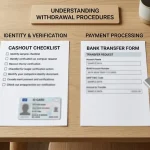
Identity checks are another concrete control. Casinos conduct KYC procedures and require identity verification before withdrawals. The requested documents commonly include photo identification, proof of address and evidence that the payment method belongs to the account holder. These checks can connect an account to an identified person and confirm details needed for withdrawal processing. They also require the customer to provide sensitive personal information, so the existence of KYC should not be treated as proof that all data handling is safe.
The useful distinction is between a control and the claim attached to it. “Uses encryption” describes a measure. “Fully secure” makes a much broader promise, covering matters that encryption alone cannot establish. Likewise, a request for identity documents shows that a verification process exists; it does not, by itself, show how documents are stored, who can access them or how long they are retained. A security page that names a tool but leaves its scope unclear provides limited evidence.
A practical review therefore separates several questions. Is the connection protected when information is sent? What identity documents are required, and at what point? Does the explanation distinguish transaction protection from the handling of submitted records? Are the security claims specific enough to be checked, rather than relying on labels such as “trusted” or “safe”? The answers describe the stated controls; they do not amount to an independent guarantee.
Technical Controls
SSL encryption protects data in transit, and KYC procedures verify identity, but neither establishes the legal status of the operator in Australia.
The word “best” is especially unhelpful when it compresses different tests into one verdict. A secure online casino website might describe encrypted transactions and identity checks, while saying nothing decisive about legal status, withdrawal disputes or the operator’s wider conduct. Fast payouts are also a separate issue: identity verification before withdrawal is a procedure, not evidence that a payment will be released quickly.
In Australia, technical features do not change the legal position of an online casino service. An offshore site can use SSL encryption and request identity documents without thereby becoming authorised to offer real-money casino games to Australians. Nor does a security label create the consumer protections associated with a lawful local service. If winnings are withheld, Australian law may not provide an effective remedy against an unlicensed offshore operator.
Using a VPN to reach a casino does not resolve that problem. It may lead to voided winnings, account closure or loss of a deposit. The accounting is plain: encryption can reduce one kind of exposure, while leaving legality, recourse and account outcomes unsettled. A security check is useful when its limits remain visible.
A licence check and a security check answer different questions. ACMA’s public register can help establish whether a wagering service holds a valid Australian licence. It is not a certificate that an online casino is permitted to serve Australians: online casino games are not a legal Australian gambling product. A listing for a wagering service should not be read as approval for casino games offered on the same site.
ACMA directs people to its website and the national register for information about legal gambling products. That distinction matters when a site describes itself as secure or presents an offshore licence as proof of Australian authorisation. An offshore licence is not an Australian licence, and a bonus does not change the status of the service. There is no welcome offer that can repair a missing legal basis.
Bonus language is a set of conditions, not a safety measure. Where an offer is displayed, its eligibility rules, required play, withdrawal restrictions and expiry terms determine what the advertised value can actually mean. Those terms should be clear before any decision involving funds. But even complete terms do not establish that a casino may lawfully provide real-money games to people in Australia. A large headline figure is not evidence of either consumer protection or local approval.
The register is useful within its proper scope: checking wagering services against ACMA’s public record. It should not be treated as a directory of secure online casinos for Australians. If a service claims an Australian licence, the claim needs to match an entry on ACMA’s register; a badge or copied licence number on the operator’s page is not the verification itself. A mismatch is a reason to stop treating the claim as established.
Access is a separate issue again. A site loading successfully does not prove that it is authorised, and a VPN does not create Australian approval. Using one to reach a casino may lead to winnings being voided, account closure or loss of the deposit. That is a poor exchange: extra access, with no added legal status.
For anyone looking for a safe and secure online casino, the Australian register cannot supply that answer for casino games. It can identify legal wagering services, while the law excludes online casino games from that category. Licence wording, bonus conditions and technical security claims should therefore be assessed as separate matters, not combined into a single assurance.
A payment method and a casino account are separate parts of a transaction. Casinos use SSL encryption to protect transactions and sensitive information as it moves between a user’s device and the site. That describes protection for data in transit; it does not establish how an e-wallet protects its own account, or guarantee that a payment will be accepted, released or returned without delay.
This distinction matters when assessing claims about a secure e-wallet casino in Australia. A wallet may be a recognised payment option, but its presence does not by itself verify the casino’s handling of funds or the conditions attached to withdrawals. The practical terms still depend on the operator’s payment rules and the processing route. A deposit confirmation records that money entered the account; it is not evidence that a later withdrawal will follow the same route or timetable.
A specialist review has reported that PayID and some e-wallets may process quickly after approval, while bank transfers and cards can take several business days. These are reported processing characteristics, not a fixed service standard. “After approval” is material: the payment can remain pending until the relevant checks are complete, and the transfer method does not determine how quickly approval occurs.
The same specialist-review source notes that card withdrawals may be slower or unavailable depending on the processor. A card accepted for deposits therefore cannot be assumed to support withdrawals. Where a payment route is unavailable for a cash-out, the operator’s stated alternative and its conditions affect the outcome more than the speed of the initial deposit.
For anyone comparing how secure online casinos are, the useful separation is between data protection and payment performance. SSL encryption is a concrete technical measure for protecting information during transmission. It does not settle whether an e-wallet balance is accessible, whether the operator will approve a withdrawal, or how long the payment chain will take. Those are different questions, and treating one as proof of the others turns a narrow security feature into a much broader promise.
The same caution applies to online casino games: payment security says nothing about the game’s return information or the version being offered. A wallet label is not a security audit, and a fast deposit is not a withdrawal guarantee. The relevant calculation is the full path from payment method to approved cash-out, with each stated condition kept separate from claims about encryption.
A deposit limit can reduce the amount available for gambling; it cannot establish that a casino is secure or lawful in Australia. The distinction matters because real-money online casino games are prohibited for operators serving people in Australia. A control displayed in an account is not a substitute for legal status, and it does not by itself guarantee that funds or personal information are protected.
A specialist review describes deposit limits that can be set daily, weekly or monthly. That is a reported feature, not a general assurance about every service. Where a limit is offered, its practical value depends on the terms: when it takes effect, whether it can be reduced immediately, and what conditions apply to increasing it. Those details should be read before treating the setting as a spending boundary. The available description does not establish that every offshore casino offers these controls or applies them consistently.
Attention A deposit limit is a spending boundary and does not convert a prohibited offshore service into a lawful or regulated Australian casino.
Responsible-gambling requirements apply to licensed operators under the Interactive Gambling Act. That principle should not be confused with a claim that online casinos hold an Australian licence. A limit may help control exposure, but it does not convert a prohibited service into a lawful one. Nor does a harm-control feature prove that withdrawals will be honoured or that a site handles data securely.
Support information is another part of player protection. Reputable platforms provide information about gambling-related harm and direct people to professional support services across Australia. The presence of a support link is useful only as an access point; it is not treatment, and it does not remove the financial consequences of continued gambling.
For a clear cost assessment, a deposit limit needs to be considered alongside the money already deposited, any funds still at risk, and the availability of independent support. If the service is unlicensed for Australian customers, the limit and support information remain features of that service—not evidence of Australian oversight. Secure online gambling cannot be judged by a single setting: harm controls have a narrow purpose, and their value ends there.
A familiar game title does not establish which version is running. Some providers release the same pokie with different RTP settings, and the operator selects the version offered on its service. Comparing titles alone can therefore leave out the detail that matters: the RTP attached to the specific game instance.
On a mobile screen, the stated RTP can generally be found in the game’s information or help area. The control is often marked with an “i” or placed in a menu. Opening it is more useful than relying on a thumbnail, promotional description or the game name. If the information panel does not show an RTP, the title by itself cannot fill that gap.
RTP means return to player. It is a stated game characteristic, not a promise about the result of an individual session. A displayed figure should be read as information about the selected game version, not as a forecast of what a player will receive. A short run of outcomes cannot confirm that a particular version is in use or establish how it will perform.
A careful comparison records the exact title and the RTP shown inside the game, then checks those details wherever the same title appears. If the figures differ, the name has not changed the underlying comparison: the versions are different. If the figures are absent or unclear, there is no sound basis for treating two listings as equivalent.
This is a narrow check, not a security certificate. A visible RTP does not establish that a service is secure, lawful in Australia or suitable for real-money play. Online casino games, including pokies, are prohibited services when offered to people in Australia under the Interactive Gambling Act 2001. Reading a game’s information panel can clarify what version is described; it cannot change that legal position.
The practical point is simple: assess the game information, not the label on the tile. For Australian readers, that distinction is informational only. It should not be taken as a recommendation to access offshore casino games or as evidence that mobile access makes them an authorised option.
Checking RTP
Open the game
Launch the specific pokie on the mobile device.
Locate information
Click on the “i” icon or open the help menu within the game.
Verify the figure
Read the stated Return to Player (RTP) percentage for that specific game version.
A casino described as Canadian, or presented as secure for Canadian customers, does not thereby become a lawful real-money casino option in Australia. Security claims and legal status answer different questions. A site may describe account or transaction safeguards, but that description does not change the rules governing services offered to people in Australia.
The Interactive Gambling Act 2001 prohibits domestic operators from offering online casino games to Australian residents. That is the relevant test for Australian legality; a Canadian label is not a substitute for it. Nor does a comparison with a secure Canadian online casino establish that the same service can lawfully provide casino games to customers in Australia. The country named in a brand’s presentation, or the market used for a comparison, cannot settle the Australian position.
The distinction matters because “secure” can refer to the handling of information or transactions, while legality concerns whether the service may be offered in this market. Treating the terms as interchangeable produces a faulty comparison: a positive security description is not evidence of permission to operate here. Equally, the word “Canadian” says nothing by itself about the legal position of a service for Australian residents.
ACMA is Australia’s primary online gambling regulator. Its role places Australian rules, rather than a foreign-market comparison, at the centre of any assessment of local status. A Canadian-focused description may be relevant to the service’s intended audience, but it does not override the Interactive Gambling Act 2001 or establish that the service is authorised to offer online casino games in Australia.
This is also why a secure Canadian casino and a lawful Australian gambling product are not interchangeable categories. One describes a security proposition associated with another market; the other would have to meet the applicable Australian legal position. Similar names, game menus or promotional language do not erase that distinction. The comparison can inform what a site claims about itself, but it cannot decide whether Australians may lawfully be offered its casino service.
A site becoming inaccessible is not merely a technical inconvenience. ACMA can ask internet service providers to block websites that offer prohibited interactive gambling services to Australian customers, as well as services offered to adults in Australia without the required licence. A block is therefore a material warning about the service and its access in this market.
ACMA also has enforcement powers beyond website blocking. It can issue fines to operators that breach the Interactive Gambling Act 2001. Blocking orders are described as a last resort when ACMA considers customer safety to be at risk. That makes a block relevant to a security assessment: it signals regulatory concern, not a routine outage that should be worked around.
The signal should not be stretched beyond what it establishes. A blocked page does not, by itself, explain every reason for the action or establish the technical condition of a site. But a site marketed as a secure online casino cannot be assessed on encryption or account controls alone while its availability is being restricted by an Australian regulator. Security claims do not cancel an enforcement warning.
Trying to bypass a block with a VPN does not resolve the underlying issue. Accessing a casino through a VPN may lead to winnings being voided, an account being closed, and the deposit being lost. A change in apparent location does not create Australian authorisation or remove the risks attached to an offshore service.
For an Australian customer, an unlicensed gambling service does not provide the consumer protections associated with a locally authorised service. If winnings are withheld, Australian laws may not assist in recovering them. A blocked site therefore raises practical questions about access and recourse, not just whether its connection appears secure.
A secure casino site should not be judged by whether it can still be opened after an ISP block. The more relevant reading is that ACMA has tools to interrupt access and can use blocking orders when safety concerns warrant that last-resort step. Continuing through a workaround may add account and funds risks while leaving the original warning unchanged.
PayID and some e-wallet withdrawals can arrive quickly after approval. Bank transfers and card withdrawals can take several business days; card withdrawals may also be slower or unavailable depending on the processor.
You may be asked for photo ID, proof of address and proof that you own the payment method used.
The law does not explicitly make individual players criminally liable simply for using an offshore casino. However, that does not make the service lawful or guarantee Australian protection or a way to recover disputed funds.