MiFinity availability depends on the operator and customer, while payment access does not establish Australian legality or game access.
MiFinity appears in searches alongside Australian online casinos because a payment service and a gambling site can seem like two parts of one transaction. They are separate questions. A name appearing in a payment-method list does not, by itself, establish that an operator accepts the service, that it is available to people in Australia, or that a casino is lawful to use from the country.
The wording also shifts between “pokies”, casino games and mobile access. These variations point to different aspects of the same underlying interest: whether MiFinity can be used in connection with an online gambling account associated with Australia. They do not establish that a particular game catalogue exists, that an app or mobile site supports the payment service, or that a specific operator permits Australian customers to register. Each claim would need its own evidence.
The distinction matters because payment availability is not a general property of MiFinity or of online casinos as a category. It depends on the arrangements applying to a particular operator and customer. A payment brand appearing on a website, in an old description or in a third-party list cannot settle the question for every Australian user. Nor does a general reference to “Australian” in a site’s marketing establish that its services are legally available in Australia.
When looking for casinos that accept MiFinity in Australia, check the payment options available to you before signing up, as they can vary. The details below highlight the limited verified information available for each listed operator.
Bizzo Casino
Bizzo Casino is listed with a Curacao Gaming Control Board license held by TechSolutions Group N.V.
Kingmaker
Kingmaker lists a minimum deposit of A$30. Its stated payout times are around 90 minutes for crypto and 1–5 days for fiat.
Vegaz Casino
Vegaz Casino lists a Curacao OGL license, number 2024/1335/0780, and a minimum deposit of EUR 20.
JeetCity Casino
JeetCity Casino is listed with a Curacao eGaming license held by Dama N.V.
Thor Casino
Thor Casino lists a Curacao license from Antillephone N.V. (Versus Odds B.V.) and a minimum deposit of EUR 20.
LevelUp Casino
LevelUp Casino lists a Curacao eGaming OGL license, number 2023/174/0082, held by Dama N.V. Its minimum deposit is A$15.
LuckyVibe
LuckyVibe is listed with a Curacao Gaming Control Board OGL license, number 2023/176/0095, held by Hollycorn N.V.
JustCasino
JustCasino is listed with a Curacao Gaming Control Board license.
Ricky Casino
Ricky Casino lists a minimum deposit of A$20, or A$30 to qualify for the bonus. Its stated payout times are under an hour for crypto and 1–3 business days for PayID.
Wild Tokyo
Wild Tokyo lists a Curacao license and a minimum deposit of A$10. Its stated payout times are 30–60 minutes for crypto and 1–5 days for fiat.
The broader payment environment can help explain why the question arises, but it cannot answer it. Contactless card payments and mobile wallets are familiar across Australia, and consumers are accustomed to moving between cards, mobile wallets and services connected to bank accounts, including PayPal. That familiarity does not show that an offshore gambling operator accepts MiFinity. Familiarity with a payment method in everyday commerce is not evidence of its availability in a particular gambling transaction.
There is also a more fundamental distinction between technical access and lawful provision. Under the Interactive Gambling Act 2001, it is illegal for operators to provide real-money online casino games to people physically located in Australia. Casino-style services such as poker, blackjack, roulette and pokies fall within the prohibited category when offered to customers in Australia. The Australian Communications and Media Authority is responsible for enforcing the Act. A payment option cannot change the legal status of the service it would be used to fund.
That legal context prevents “Australian casino” from serving as a simple label for a locally regulated product. An offshore site may use Australian currency, refer to Australian customers or display a payment method familiar to them; none of those features establishes local authorisation. The availability of a payment route and the legality of the underlying gambling service are different matters, and one cannot be used as proof of the other.
 Goldenbet payment methods, deposits and withdrawalsGoldenbet Notes Goldenbet uses a hybrid cashier model with conventional card and alternative-payment rails alongside a sizeable crypto list. The account terms…
 Casinos That Accept Mastercard in Australia: The EvidenceLearn what Australian law says about offshore online pokies, what Mastercard evidence can establish, and why payment claims remain unverified. ACMA enforces…
Consumer protection is a separate part of the calculation. Australian consumer law does not protect players who use offshore casinos. That means a payment description should not be read as an assurance about the service, the handling of a transaction or the options available if a dispute arises. A payment brand may identify how a transaction is proposed to be made; it does not supply consumer-law protection for an offshore gambling relationship.
The phrase “MiFinity casino” is therefore best understood narrowly: it signals an interest in whether the payment service and a casino account are compatible. It does not identify a verified operator, confirm that the method works for Australian residents, or establish that online casino play is legally available to them. The additional words “mobile”, “new” or “best” do not change the evidential standard. They add a device, freshness or ranking preference, not proof of acceptance or legality.
The useful boundary is straightforward. A payment-method claim concerns a transaction; a casino claim concerns the service being offered; and Australian law concerns whether that service may be provided to people in the country. Treating those as one question creates an unreliable answer. A site’s stated payment options cannot establish lawful availability, while a payment service’s presence in Australia cannot establish that an offshore casino accepts it. For this topic, no operator should be described as a MiFinity-accepting Australian casino without substantiated, current evidence—and even a confirmed payment feature would not make the underlying offer lawful in Australia.
Legal Warning
Under the Interactive Gambling Act 2001, it is illegal for operators to provide real-money online casino games to people physically located in Australia.
A deposit claim has practical value only when it identifies the payment method, the amount accepted, the steps needed to complete the transaction, and any conditions that affect the final debit. A reference to MiFinity by itself establishes none of those details. It does not show that a particular cashier offers the service, that a chosen amount will be accepted, or that a transaction can be completed from Australia.
The distinction matters for searches about small deposits. A figure such as $10 can appear in a headline or a general payment description without proving that it is the minimum MiFinity deposit at a casino. A minimum is an operator-set term, not a property of the payment name. It may also be different from the minimum for other cashier methods at the same operator. Without a current, specific cashier term, the figure cannot be treated as a usable funding threshold.
The same applies to claims that a casino accepts MiFinity deposits. Acceptance needs to be tied to a specific operator and to the deposit transaction itself. A payment service appearing in a general list does not establish that it is available to Australian customers, or that it is selectable in the cashier when an account is being funded. Naming a method and confirming its availability are separate things.
A complete deposit description would distinguish several points that are often compressed into one claim:
These are not interchangeable details. For instance, a method could be named in general material while the cashier shows different options for a particular customer. Likewise, an amount described as a minimum would not, by itself, establish whether additional charges affect the amount leaving the payment account or the amount credited.
No general deposit procedure should be inferred from the method name. The sequence of selecting a payment option, entering details, confirming an amount and submitting a transaction is not proof of MiFinity-specific steps. Those steps must be established by the actual cashier and the applicable terms. Describing an assumed sequence as standard would turn a plausible outline into an unsupported instruction.
A deposit figure is not merely a search label. It can determine whether a payment is possible at all, whether a balance is sufficient, and whether the amount credited matches the intended budget. A claim about a low minimum therefore needs to state the operator, the relevant payment option and the conditions attached to the figure. Without that context, a number is not a dependable basis for planning.
The final calculation also depends on costs beyond the stated deposit amount. In Australia, contactless card payments and mobile wallets such as Google Pay and Apple Pay are accepted almost everywhere, and consumers are comfortable moving among cards, mobile wallets and bank-linked services such as PayPal. That broad familiarity does not establish that MiFinity is available through an online casino cashier. Nor does it establish that using MiFinity for a deposit would carry the same terms as any of those other payment routes.
For a deposit, the useful distinction is between a payment method’s general existence and a completed, operator-specific funding route. The former says little about amount, availability or conditions. The latter requires clear terms that match the cashier transaction. Until those terms are clear, neither a low-deposit figure nor a claim of MiFinity support can be used to calculate a reliable starting balance.
The sensible accounting treatment is therefore narrow: do not count a proposed MiFinity deposit amount as available funding until the relevant cashier and terms confirm it. A listed amount, a payment logo or a broad statement about accepted methods may indicate a possibility, but it does not settle the transaction’s actual conditions. That is the difference between a headline and a deposit term.
A label such as “best MiFinity casino” compresses several separate claims into one: that an operator serves the relevant market, that MiFinity is supported, and that the arrangement merits a favourable ranking. The label itself establishes none of them. For Australian readers, the distinction matters because a polished comparison page can look like a practical shortlist while leaving the conditions behind its ranking unclear.
 Casinos That Accept Neosurf in Australia: What to KnowLearn why a Neosurf logo or general payment mention does not confirm deposits for Australian customers, and what remains unverified.
 Ethereum Casinos in Australia: What Is VerifiedLearn how Ethereum casino claims differ from confirmed ETH acceptance, Australian availability and legal access; no operator or game catalogue is verified…
A useful assessment starts with scope. “Supports MiFinity” needs to refer to a particular operator, customer location and payment function. A statement about an international website, or about a payment option in general, does not establish that the same option is available to someone physically in Australia. Nor does the word “casino” identify whether the claim concerns account funding, withdrawals or both. Those are separate propositions, not interchangeable descriptions of one feature.
The ranking also needs a stated basis. “Best” might refer to access, payment support, costs, transaction limits, service terms or some combination. Without defined criteria and evidence for each one, the ranking is an opinion presented in comparison-table form. A brand logo beside a payment method is similarly limited: it may signal an association, but it does not by itself explain which customers qualify or what the arrangement covers.
A specific claim is easier to assess when it identifies the operator and says plainly that the statement applies to Australian customers. It should then describe the precise function being claimed, rather than treating “accepts MiFinity” as a complete account of the payment relationship. Any associated conditions should be visible in the operator’s terms, not inferred from a search result, a payment-method badge or a broad promotional headline.
An operator's own payment page is more directly relevant to their stated terms than a generic directory entry, though both should be checked against actual account terms.
Source and date matter as well. A payment page maintained by an operator is more directly relevant to that operator’s stated terms than a generic directory entry. Even then, the statement should be checked against the terms that govern the account: an operator’s page can be incomplete, and a directory can repeat old or general material. A date attached to a claim helps show when it was reviewed; it does not guarantee that every customer is eligible or that every listed function is available.
This is not a demand for elaborate proof. It is a way to separate verifiable detail from presentation. A claim that names the market, the function, the relevant conditions and its source can be tested. A claim consisting only of “top choice,” “trusted” or “instant” cannot carry the same weight, because those words do not specify an operational term.
Payment comparisons do not change the legal status of the underlying service. The Interactive Gambling Act 2001 prohibits operators from offering real-money online casino games to people physically located in Australia, and the Australian Communications and Media Authority enforces the Act. Australian consumer law does not protect players using offshore casinos. A payment-method comparison should therefore not be read as an endorsement, a local consumer safeguard or a recommendation to use an offshore operator.
For the same reason, a list of sites labelled suitable for Australians would imply more than a payment claim. It could suggest that the services are available and appropriate for local use, when payment branding cannot establish that. The label “best” adds no legal protection and does not settle whether an operator may provide the service in Australia.
 Casinos That Accept Litecoin in Australia: What to KnowLearn how Australian law treats offshore online casinos, what ACMA’s role is, and why Litecoin payment claims and offers remain unverified.
 Bitcoin Cash casinos in Australia: payments and rulesLearn how to assess BCH deposit and withdrawal claims, casino terms and Australian legal limits, without relying on a ranked list.
The practical conclusion is narrow: a ranking is only as useful as the specific terms it documents, and a MiFinity reference alone is not proof of Australian availability. Where a page does not define what “accepts” means, identify the market it covers or show the basis for its rating, its headline should be treated as marketing language rather than a substantiated comparison.
An instant-withdrawal claim is meaningful only when it identifies what is supposed to happen instantly. A payment request being submitted, a casino approving it and money becoming available in a MiFinity account are different events. Treating them as one step can make a short processing claim sound like immediate access to funds, even when the wording does not define the endpoint.
For a timing claim to be financially useful, it needs to state which part of the process it measures and the conditions attached to that estimate. Without those details, “instant” is a label, not a payout schedule. It does not establish when funds will be accessible, whether a casino supports withdrawals through MiFinity, or whether a particular account or transaction qualifies.
That distinction matters because a withdrawal is not simply the reverse of a deposit. A payment method appearing in a cashier, or being discussed in connection with deposits, cannot by itself establish that the same method is available for payouts. Nor does it establish how long a payout would take. Method availability and processing speed are separate claims, and neither can be inferred from the other.
Attention A payment method appearing in a cashier for deposits does not establish that the same method is available for payouts or define the processing speed.
The phrase “instant MiFinity withdrawal” therefore should not be read as a promise of immediate access to winnings. A responsible comparison would need a clear, current statement of the payout route, the event that starts the clock, the event that ends it, and any conditions that can affect the estimate. An advertised speed with no defined start and finish cannot be converted into a reliable time-to-funds calculation.
The same standard applies to claims about real-money pokies or a no-deposit offer. Those terms do not supply evidence about payment speed, and the presence of an offer would not establish that a MiFinity withdrawal is possible or immediate. Combining several attractive labels does not add the missing transaction details; it only makes the claim harder to assess.
Australian law also sets a boundary around the subject. The Interactive Gambling Act 2001 prohibits operators from providing real-money online casino services to people in Australia, including casino-style games. The Australian Communications and Media Authority enforces that law. Players using offshore casinos are not protected by Australian consumer law. A payout-speed claim does not change any of those conditions or turn an offshore service into a locally protected one.
For a financial decision, the relevant figure would be the time until funds are actually accessible, not a general label applied to a withdrawal. Where a claim does not define that endpoint or its conditions, there is no sound basis for treating it as an instant payout.
 Bitcoin casinos in Australia: how deposits workUnderstand how blockchain confirmations affect deposits and payouts, how operators set confirmation requirements, and what to check about offshore access and
 Trustly Casino Sites in Australia: What Is VerifiedLearn how to assess Trustly acceptance claims, separate payment support from casino legality, and understand ACMA’s enforcement role in Australia.
Calling a casino “Mifinity-accepting” makes a specific claim: that MiFinity is an available payment option for the relevant customers, not merely that the service exists or that a payment provider appears somewhere on the site. The label alone does not establish that claim.
Acceptance is not a permanent, universal attribute of a casino brand. Payment options can depend on the country, the account and the operator’s current arrangements. A statement about one market therefore cannot establish availability in Australia. Nor does a general reference to MiFinity demonstrate that it is supported for every customer or at every stage of an account’s use.
The distinction matters when evaluating claims about casino sites that accept MiFinity. A third-party list may repeat an older description, combine information from different regions or use “accepts” without clarifying what that means. A payment logo or a page mentioning the service is evidence that MiFinity has been discussed; on its own, it does not confirm current availability for Australian customers. A search result is not a transaction record.
The same caution applies to phrases such as “best casino with MiFinity” or “casino that allows MiFinity.” “Best” is a ranking, not a payment fact, and it requires a stated basis for comparison. A site can only be assessed against that description when the underlying acceptance claim is established for the relevant market. Without that, a ranked recommendation would turn an unconfirmed label into a confident conclusion.
Payment options are not permanent or universal; they can depend on the specific country, the user's account, and the operator's current arrangements.
“MiFinity debit” can also blur separate questions. A brand name, a payment account and a particular card product are not interchangeable descriptions. Mention of one does not prove that another is supported. The wording on a site needs to identify the actual service rather than relying on a broad payment-method label.
For the phrase “casinos that accept MiFinity Australia 2026” to be meaningful, the claim would need to be current and specific to Australia. The year in a heading does not make an old statement current, and an Australian audience does not make information gathered for another jurisdiction applicable. These are basic conditions for interpreting the claim, not proof that any named casino meets them.
The defensible conclusion is narrow: general descriptions cannot establish which, if any, casino currently accepts MiFinity for Australian customers. Naming a “best” option or presenting a list would imply a level of confirmation that is not available. Acceptance should not be inferred from a brand mention, a generic payment badge or an unqualified third-party description.
A casino payment method and a casino’s game catalogue are separate features. The presence of a payment option would not, by itself, establish which games an operator offers; a game listing would not show that MiFinity can be used to fund an account. The two questions require different evidence and should not be treated as interchangeable.
 Casinos That Accept POLi in Australia: What Is VerifiedThe article separates claims about Australian access from POLi support and explains why casino names, pokies and payment labels do not verify…
 Casino Sites That Accept Amex in AustraliaLearn how operator acceptance and issuer approval affect Amex deposits, plus what to check about limits, fees, withdrawals and AUD transactions.
This distinction matters when a page or search result places MiFinity beside casino games or pokies. Such wording can suggest a connection without establishing one. It may refer to a payment method, a game catalogue, or both, but those claims need to be checked independently. A payment label does not identify particular games, and a catalogue does not confirm how it can be paid for.
The same separation applies to payment options shown in a cashier. A displayed method would concern transactions, not the content available after an account is opened. Conversely, descriptions of games do not establish that a particular payment service is supported. Without operator-specific, current terms, neither point can safely be inferred from the other.
For Australian residents, there is also a prior issue beyond payment and content: the Interactive Gambling Act 2001 prohibits operators from providing real-money online casino games to people in Australia. That legal position is not altered by the payment method named on a site or by the games it advertises. A payment reference is not evidence that the underlying service is lawful for Australian residents.
Australian consumers are comfortable moving among cards, mobile wallets and services linked to bank accounts, including PayPal. That broader familiarity with digital payments does not establish MiFinity support at a casino, nor does it verify any casino game catalogue. General payment habits are not operator terms.
A claim about “MiFinity casino games” therefore combines two propositions: that a casino accepts the service and that it offers specified games. Each requires independent substantiation. If either part is only implied by a heading, image, or adjacent label, the wording is not enough to settle the question. Keeping payment functionality separate from game access avoids turning association into a factual claim.
A casino’s payment menu does not determine whether its service may lawfully be offered in Australia. The Interactive Gambling Act 2001 bars operators from providing real-money online casino games to people physically in Australia. That restriction covers casino-style services such as poker, table games and pokies; adding MiFinity as a cashier option would not alter the operator’s position under the law.
The Act is directed at operators, not framed as an explicit criminal offence for an individual who uses an offshore site. That distinction does not make an offshore casino a locally authorised service, nor does it create consumer protections equivalent to those available for services covered by Australian consumer law. Players using offshore casinos are not protected by Australian consumer law. A payment method, including MiFinity, cannot supply that protection or establish that an operator is permitted to serve people in Australia.
Enforcement sits with the Australian Communications and Media Authority (ACMA), which administers compliance with the Act. Offshore casino services are subject to active blocking and enforcement, so apparent online availability should not be treated as evidence of lawful local operation or dependable access. The legal position concerns the service offered to people in Australia, not merely the company’s location or the currency displayed at checkout.
 Casinos That Accept Visa in Australia: What to KnowThe Interactive Gambling Act 2001 prohibits operators from providing online casino games to people in Australia; Visa availability does not establish permission.
 Casino Sites That Accept BPAY in Australia: What to KnowLearn why everyday Australian payment habits do not confirm BPAY acceptance at a casino, and why payment availability and legal game access…
Consequently, descriptions such as “Australian casino with MiFinity” can blur two separate issues: whether a site lists a payment method and whether it may provide online casino games to people in Australia. The first is a cashier claim; it does not answer the second. Nor does a foreign licence change the Australian prohibition on operators offering these services locally. The distinction is material because a working deposit route is not a legal status, and an account page cannot turn an offshore service into one protected by Australian consumer law.
For Australian readers, the relevant legal context is therefore narrower than a list of payment-compatible casinos might suggest. The Act restricts operators from offering online casino games to people in Australia, ACMA enforces that framework, and offshore use does not carry Australian consumer-law protection. Those points remain unchanged regardless of whether a site advertises MiFinity or another payment option.
Whether MiFinity can be used to receive a casino withdrawal cannot be treated as a general feature of online gambling sites. A payment option for adding funds, if displayed, would not by itself establish that the same route is available for payouts.
That distinction matters when assessing a balance. A displayed payment method does not settle how winnings may be returned, whether an account must meet particular requirements, or whether another route would be used. Those terms need to be explicit before any transaction is considered.
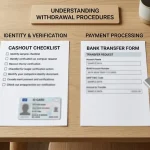
Identity checks can also affect access to financial transactions. Online casinos commonly conduct Know Your Customer checks, which may involve confirming a customer’s identity. That general practice does not establish a MiFinity-specific rule or determine what any operator would require in an individual case.
Online casinos commonly conduct Know Your Customer (KYC) identity checks, which may affect a customer's ability to perform financial transactions.
There is also a separate legal and consumer-protection issue. Under the Interactive Gambling Act 2001, operators cannot provide real-money online casino games to people physically located in Australia. The Australian Communications and Media Authority enforces the Act. Australian consumer law does not protect players who use offshore casinos, so a payment route should not be mistaken for evidence of local legal status or consumer recourse.
Accordingly, a claim that a casino supports MiFinity withdrawals needs to be checked against clear, current terms that specifically cover payouts—not inferred from a deposit option or a general payment-method label. Without that confirmation, neither availability nor conditions can be represented as settled.
A payment method is useful only when its terms can be determined at the point of use. For MiFinity, the relevant questions concern whether a casino lists it in the cashier, how a payment is initiated, which account details are required, and what charges or limits apply.
A name or logo on a general payment-method page would not, by itself, settle the transaction terms. Availability can depend on the individual operator and the payment route offered to a customer. Nor does familiarity with other services establish how MiFinity works at a particular casino. Australian consumers may be accustomed to switching among cards, mobile wallets and bank-linked services such as PayPal, but that broader payment landscape is not evidence of MiFinity support.
The cost calculation also needs specific terms. A fee could be charged by a payment provider, an operator, or a financial institution; the responsible party and amount would need to be clear before a transaction. The same applies to transaction limits and currency handling. Without those details, a headline claim that a casino lets customers pay with MiFinity does not provide a complete basis for comparing payment options.
 Casinos That Accept PayID in Australia: What Can Be VerifiedLearn why search terms do not confirm casino acceptance of PayID, and how to assess payment claims without assuming a method is…
 Casinos That Accept CashToCode in AustraliaLearn why widespread card and mobile-wallet use does not confirm CashToCode acceptance, and how to distinguish general payment habits from casino-specific evidence.
That is not a minor gap in presentation: without the terms, the net cost and the amount that can be transferred cannot be calculated. A cashier listing, where one is shown, would need to be read alongside the operator’s current payment conditions and any applicable account or provider terms.
This payment-method question is separate from whether a casino permits access to particular games. A payment label does not establish a game catalogue, and it does not change the Australian legal position on online casino services. For anyone assessing an offshore service, Australian consumer law does not protect players using offshore casinos.
A bonus described as linked to MiFinity would need clear terms showing what triggers it, what value is credited, and what conditions govern any resulting balance. Without those details, the label alone does not establish that a promotion exists or that using MiFinity changes the offer.
Bonus language can refer to different arrangements: a deposit-linked offer, a no-deposit credit, or a promotion available to a defined group of customers. Those categories are not interchangeable. Each requires its own eligibility rules, expiry conditions and restrictions on withdrawing funds. None can be inferred merely from a payment method appearing beside a bonus claim.
The financial comparison is straightforward: a promotional figure has no usable value until its conditions are known. A deposit requirement, wagering condition, excluded game category, maximum conversion amount or expiry date can change the amount that is ultimately withdrawable. No such terms should be assumed for a MiFinity-related casino promotion.
Australian context also matters. The Interactive Gambling Act 2001 prohibits operators from providing real-money online casino games to people physically located in Australia. Australian consumer law does not protect players using offshore casinos. A bonus claim does not alter either point, and should not be treated as a reason to engage with an offshore gambling service.
Accordingly, “MiFinity casino bonus” is only a description of a possible association, not evidence of an available offer or its value. Without stated eligibility and complete conditions, there is no defensible calculation of what a promotion would return.
Examples named as accepting Amex deposits for Australian players include Ignition Casino, Joe Fortune and PlayAmo. Jackpot City Casino, Spin Palace and Ruby Fortune are also listed; check the casino’s cashier to confirm availability.
Look for American Express as a selectable option in the casino’s cashier. If available, select it, enter your card details and the deposit amount in AUD, then submit the payment.
Using Amex does not provide Australian consumer-law protection for an offshore casino relationship. A payment method also does not make an online casino offer lawful in Australia.
An Amex payment does not change the legal status of an offshore casino offer or provide Australian consumer-law protection for that relationship. The Interactive Gambling Act prohibits operators from offering online casino games to people in Australia.
Amex deposits are typically free, but a casino may add a 1.5% surcharge, and card currency conversion can incur a 3% fee. Withdrawal fees may also apply, and some casinos do not allow withdrawals to Amex.
Amex may block payments to a particular website, and Australian banks may also block gambling-related Amex transactions. Acceptance therefore varies by casino and by the card issuer’s restrictions.
Yes, an Amex gift card can be used for deposits at casinos that accept American Express, but it cannot be used to withdraw winnings.
Online casinos typically require customers to complete a Know Your Customer assessment before financial transactions.