Payment availability does not establish whether an offshore operator may lawfully offer online casino games to people in Australia.

Trustly and Australian online pokies are often treated as one practical question: whether a casino serving people in Australia accepts Trustly. That wording can blur two separate issues. One is whether a particular service says it supports a payment method. The other is whether the service may lawfully offer online casino games to people physically located in Australia. A payment option does not settle the second question.
The legal position is central to interpreting any claim framed as an Australian casino service. Under the Interactive Gambling Act 2001, operators are prohibited from providing online casino games to Australian residents. The rule concerns the operator’s provision of the games; it does not explicitly make a player’s use of an offshore site a criminal offence. That distinction should not be mistaken for approval, local regulation or protection equivalent to that available for lawful domestic services.
The Australian Communications and Media Authority, usually referred to as ACMA, administers enforcement of the Act. Its role matters because a website’s accessibility or a payment logo on its pages does not establish that the operator is permitted to provide casino games in Australia. Nor does the use of a bank-linked payment service turn an offshore gambling service into a locally authorised one.
Trustly availability can vary by casino and by the payment options offered to Australian players, so check the cashier before signing up. The details below provide a brief reference point for reviewing the listed sites.
Bizzo Casino
Bizzo Casino is listed with a Curacao Gaming Control Board license through TechSolutions Group N.V.
Kingmaker
Kingmaker lists a minimum deposit of A$30. Its stated payout speed is around 90 minutes for crypto and 1–5 days for fiat.
Vegaz Casino
Vegaz Casino lists Curacao license OGL/2024/1335/0780 and a minimum deposit of EUR 20.
JeetCity Casino
JeetCity Casino is listed with a Curacao eGaming license held by Dama N.V.
Thor Casino
Thor Casino lists a Curacao license from Antillephone N.V. for Versus Odds B.V. Its stated minimum deposit is EUR 20.
LevelUp Casino
LevelUp Casino lists Curacao eGaming license OGL/2023/174/0082, held by Dama N.V., and a minimum deposit of A$15.
LuckyVibe
LuckyVibe lists a Curacao Gaming Control Board license, OGL/2023/176/0095, held by Hollycorn N.V.
JustCasino
JustCasino is listed with a Curacao Gaming Control Board license.
Ricky Casino
Ricky Casino lists a minimum deposit of A$20, or A$30 to qualify for the bonus. Its stated payout speed is under an hour for crypto and 1–3 business days for PayID.
Wild Tokyo
Wild Tokyo lists a Curacao license and a minimum deposit of A$10. Its stated payout speed is 30–60 minutes for crypto and 1–5 days for fiat.
This is why terms such as “Australian online casino” need careful interpretation. They may describe a site’s intended audience, its marketing language, or the country from which a person is trying to access it. Those descriptions are not interchangeable. A service can be presented as suitable for Australians without being a lawful Australian casino service. The words attached to a cashier option do not change that distinction.
The same applies to searches combining Trustly with pokies. They express an interest in a payment method and a type of gambling service, but they do not by themselves establish that any particular operator accepts Trustly from Australian customers. Acceptance is a specific claim about a particular service and transaction path. It cannot be inferred merely from the presence of Trustly elsewhere on a website, in a general payment-method description, or in material aimed at a different market.
The word “best” does not resolve the problem. A ranking would require a defined set of services that can lawfully be compared for this audience, along with consistent terms on which to compare them. Where the underlying category is not a lawful Australian casino market, presenting a “best” Australian Trustly pokies choice would imply a legitimate local shortlist that the legal framework does not support. The same caution applies to descriptions of a new or mobile casino: a new label or a mobile interface says nothing about whether the service may offer online casino games in Australia.
 Skrill Casino Sites in Australia: What Is VerifiedSee how to separate claims about pokies, Skrill acceptance and Australian availability, and why deposit and payout details remain unverified.
 Ethereum Casinos in Australia: What Is VerifiedLearn how Ethereum casino claims differ from confirmed ETH acceptance, Australian availability and legal access; no operator or game catalogue is verified…
A Trustly reference should therefore be read narrowly. At most, it indicates that a service claims some connection between its cashier and Trustly. It does not establish that the method will be available to every customer, that a payment can be completed, or that the casino itself is lawful for Australian residents. Those are distinct propositions, and one cannot be used as proof of the others.
There is also a consumer-protection consequence. Australian consumer law does not protect players who use offshore casinos. That means a presentation styled for Australians should not be confused with the safeguards of a lawful local casino market. A familiar payment name may make the transaction appear ordinary; it does not supply local consumer protections or change the operator’s obligations under the Interactive Gambling Act.
The practical boundary is consequently clear even when a website’s wording is not. A claim about Trustly acceptance is not evidence of an Australian licence, and the payment method does not create one. The legal test concerns the provision of online casino games to people in Australia, not the branding of the site or the route shown in its cashier. A search for Australian pokies associated with Trustly cannot be treated as confirmation that such a service is lawful or locally protected.
Legal Warning
Under the Interactive Gambling Act 2001, operators are prohibited from providing online casino games to Australian residents, and Australian consumer law does not protect players using offshore casinos.
A payment method’s name does not establish the amount required to fund an account. For a Trustly-labelled deposit, the relevant figures would be the minimum and maximum shown for that transaction, any charge applied before confirmation, and the amount ultimately credited. Without those terms, the deposit cannot be costed or compared on price. A low figure in a headline would not settle the question: the amount accepted at checkout and the amount credited are what determine the actual funding cost.
That distinction matters when assessing a small-deposit claim. A stated threshold is meaningful only if it applies to Trustly, is available to the account in question and is shown before the payment is submitted. A general casino minimum cannot establish a Trustly minimum. Nor does an amount associated with another payment route establish what Trustly would accept. The cashier’s displayed terms are the relevant figures for a transaction; the method name alone supplies none.
Payment habits in Australia provide context, but not proof of casino acceptance. Contactless card payments are widespread, as are mobile wallets such as Google Pay and Apple Pay. Australians are also familiar with moving between cards, mobile wallets and bank-linked services such as PayPal. That familiarity describes ordinary payment use. It does not confirm that a particular service can be used to fund an online casino account, or that a Trustly option will appear in a particular cashier.
The same separation applies to payment routes. A service linked to a bank is not automatically interchangeable with a bank transfer, a card payment or a mobile wallet. Each route has its own availability and transaction terms. Seeing one familiar option listed does not establish that another is supported, and a general description of Trustly does not establish that a casino cashier offers it. The route must be identified for the transaction itself, rather than inferred from the way consumers commonly pay elsewhere.
No Trustly-specific deposit amount, fee or processing condition can be assigned as a general Australian casino term. That leaves the main cost components unpriced: what the transaction requires at the outset, whether a charge is applied, and whether the credited balance matches the submitted payment after any conversion or other adjustment. A comparison that omits those components is not a usable cost comparison. It is a method label without a settled total.
The deposit screen is where these details would need to be made clear before submission: the selected method, the currency, the amount to be charged, any stated fee, and the amount to be credited. If any of those figures changes between selection and confirmation, the displayed total is the figure that matters. A payment being technically available would not by itself establish that its terms are economical or suitable. Conversely, familiarity with a payment service does not make it available through a particular cashier.
There is also a legal limit that prevents payment convenience from being treated as a recommendation. Australian law prohibits operators from providing real-money online casino games to people in Australia. A payment option, even if described as accessible, does not change that position or make an offshore casino service lawful for operators to provide. Credit card payments must not be presented as a route for online gambling. The prevalence of contactless cards in everyday commerce is not evidence that they are an appropriate or available casino funding method.
Accordingly, Trustly cannot be ranked against cards, wallets or bank-linked services on deposit cost using a method name alone. A meaningful comparison would require the exact terms visible for the transaction, including the payable amount and any fee, together with confirmation that the route is actually offered. General Australian payment habits answer a different question: they show that consumers use several kinds of payment service, not that a particular casino deposit route exists.
For any proposed deposit, the relevant calculation is straightforward in form, even when its inputs are not: amount submitted, charges applied, and amount credited. If those values are not set out before confirmation, the final funding cost cannot be calculated. No assumed minimum or presumed processing condition repairs that gap. The cashier’s stated transaction terms—not a broad claim about Trustly—would have to supply the figures.
A claim that a casino offers instant Trustly withdrawals needs to distinguish between a withdrawal being requested, approved and reaching the account. Those are different points in a transaction. A label such as “instant” does not, by itself, specify which point it describes or establish when funds become available.
 Casino Sites That Accept BPAY in Australia: What to KnowLearn why everyday Australian payment habits do not confirm BPAY acceptance at a casino, and why payment availability and legal game access…
 Casinos That Accept POLi in Australia: What Is VerifiedThe article separates claims about Australian access from POLi support and explains why casino names, pokies and payment labels do not verify…
For an instant-withdrawal claim to be comparable, its terms would need to say what happens instantly. It might refer to the operator processing a request, rather than the funds arriving in the account. It could also depend on the receiving route and the conditions attached to that particular transaction. Without a defined start point, end point and applicable conditions, “instant” is a description, not a measurable payout commitment.
The same distinction matters when a claim combines Trustly with real-money pokies. A payment method and a game offering are separate matters; one does not establish the other. Nor does a withdrawal claim establish that a service is lawfully available to Australian residents. The word “best” adds no usable comparison unless the relevant payout conditions and final amounts can be compared on the same basis.
A practical comparison would require the same information for each payment route: when processing begins, what must happen before release, when funds are considered received, and whether any charge or currency conversion changes the amount. If one route reports operator processing time and another reports arrival time, the figures are not like for like. A ranking built from them would give a precise appearance to unlike measurements.
A specialist review has described bank transfers as potentially taking longer and carrying higher fees. That is a general point about bank transfers, not a Trustly payout timetable. It cannot establish that a particular Trustly transaction follows the same route, incurs a fee, or takes a particular amount of time. It offers context only: payment routes can differ in both waiting time and cost, so neither should be inferred from a broad claim of speed.
That distinction also prevents a misleading comparison between “instant” and bank transfer. A comparison is meaningful only when both descriptions cover the same transaction stages and the same kind of receiving account. If the terms do not define those stages, there is no reliable basis for saying one route is faster or cheaper than another.
Payout speed and payout value are separate questions. To calculate the amount received, the applicable withdrawal fee and any currency-conversion treatment would need to be known. A displayed withdrawal request is not enough to establish the net amount after any deductions.
The distinction is especially important where a payment is described as both instant and fee-free. Each is a separate claim. A stated processing speed does not establish that there is no charge, while a fee-free description does not establish when funds will arrive. The terms need to cover both before either can be used in a financial comparison.
Australian residents also need to account for the legal setting rather than treating payment availability as approval of a service. The Interactive Gambling Act 2001 prohibits operators from providing real-money online casino games to people in Australia. Australian consumer law does not protect players who use offshore casinos. Those points do not supply a payout estimate; they define the risk surrounding any claim about offshore casino withdrawals.
 Casino Sites That Accept Osko in Australia: What to CheckLearn what an Osko acceptance claim can establish, how deposit routes differ from withdrawal options, and why general payment habits are not…
 Casinos That Accept Visa in Australia: What to KnowThe Interactive Gambling Act 2001 prohibits operators from providing online casino games to people in Australia; Visa availability does not establish permission.
For a Trustly payout, then, the only useful comparison is one supported by clear, transaction-specific terms: a defined completion point, a stated fee basis and a clear account of how the requested amount becomes the amount received. Without those elements, “instant” cannot be converted into a dependable timing or value calculation.
A statement that an online casino accepts Trustly is a claim about a payment option, not proof that the service is lawful for people in Australia. The distinction matters: a payment logo, a cashier entry or a third-party description can indicate what is being asserted, but it does not establish that the operator may offer online casino gambling to Australian residents.
Naming operators as though their current payment arrangements were confirmed would turn an unverified assertion into a recommendation. A payment method’s appearance in a description is not enough to support that leap.
The legal position is separate from the payment claim. Under the Interactive Gambling Act 2001, an operator must not provide online casino gambling to people in Australia. The Act places the prohibition on the provider; it does not expressly make an individual’s use of an offshore site a criminal offence. That distinction does not make the service lawful, locally authorised or protected.
The Australian Communications and Media Authority (ACMA) enforces the Act. Its role is relevant to the status of offshore casino services, but an enforcement authority’s existence does not certify a particular operator or payment route. A claim about Trustly cannot be treated as evidence of approval by ACMA.
Regulatory Role
The Australian Communications and Media Authority (ACMA) administers the enforcement of the Interactive Gambling Act 2001 regarding offshore casino services.
There is also a practical consumer-protection limit. Australian consumer law does not protect players who use offshore casinos. If a payment claim proves inaccurate, or a dispute arises over a transaction, an Australian customer cannot assume the safeguards available in a locally regulated consumer arrangement will apply. This is a material cost of relying on an offshore service, even where the advertised payment method sounds familiar.
The useful reading is therefore narrow: “Trustly accepted” describes what a casino or another party says about a payment facility. It does not answer whether the operator is allowed to serve people in Australia, whether the claim is current, or what protections apply if something goes wrong. Those are different questions, and the payment wording settles none of them.
A search for casino sites that accept Trustly in Australia can produce statements that appear definite. Definitive wording is not the same as verified status.
A “best” label only has value when the options are assessed against comparable terms. For a Trustly casino, that would require confirmed acceptance of the payment method and operator-specific conditions that can be compared on a consistent basis. Without those, a ranking would turn an untested claim into a recommendation.
 Casino Sites That Accept Amex in AustraliaLearn how operator acceptance and issuer approval affect Amex deposits, plus what to check about limits, fees, withdrawals and AUD transactions.
 Casinos That Accept MiFinity in Australia: What’s VerifiedLearn why a MiFinity listing does not prove an Australian casino accepts it, permits local customers, or is lawful to use; no…
The same standard applies to lists of Trustly casino websites. A payment logo or a line in a promotional description does not, by itself, establish that the method is available to Australian customers or usable for a particular transaction. Nor does it show the conditions attached to the option. A shortlist built from such claims would look precise while leaving the key comparison unresolved.
Bonuses do not repair that problem. A casino bonus associated with Trustly has no clear comparative value unless its eligibility conditions, payment requirements and withdrawal terms are known. The headline offer is only one part of the calculation; a payment method cannot be treated as a bonus advantage merely because both appear on the same page. Without comparable terms, claims of the best Trustly casino bonus cannot be assessed on their face.
A useful comparison would separate the questions rather than combine them into one rating:
These are distinct checks. A positive answer to one does not settle the others. In particular, a site’s claim about a payment method is not evidence that its casino service is lawful for people in Australia.
Accordingly, there is no defensible basis for naming a best Trustly casino site, ranking Trustly casinos, or presenting a verified Trustly casino list. That is not a minor gap that can be filled with star ratings or broad claims about popularity. A ranking requires comparable operators and terms; without them, the order would be arbitrary.
The practical result is narrower but more reliable: treat a “best” label as a claim, not as a measured conclusion. Payment availability, bonus wording and legal status each need to stand on their own. When those elements are not established together, a polished list does not make the comparison complete.
A payment method and a casino’s catalogue describe different things. A Trustly label, where displayed, would identify a claimed way to move funds; it would not identify which forms of gambling are available, or whether a particular activity can be funded through that route. Combining the two in one description does not establish a connection between them.
The distinction matters because payment terms generally apply at the account or transaction level, while access to a service is governed by separate conditions. A cashier may describe accepted payment routes without specifying how those routes relate to individual products. Conversely, a reference to a game category says nothing by itself about the methods available for transactions. Treating either statement as proof of the other collapses two separate questions into one.
 EcoPayz Casino Sites in Australia: What’s VerifiedThe article distinguishes Australian-facing sites from Australian-licensed operators and explains why no EcoPayz acceptance claim is verified.
 Neteller Casinos in Australia: What the Evidence ShowsThe article separates payment claims from game access and explains that the Interactive Gambling Act 2001 bars operators from providing real-money online…
The same applies to broad references to casino games and Trustly. They do not establish that Trustly is accepted by a particular operator, that a transaction would be permitted for any specific activity, or that a service is available to people in Australia. Those points cannot be inferred from a general payment label. The practical distinction is simple: payment acceptance concerns the method; product access concerns the service.
This separation also limits what can be concluded from a payment-options panel. It may indicate a stated payment route, but it does not, by itself, explain the route’s scope, the services to which it applies, or any relevant restrictions. A general mention of Trustly should therefore not be read as a game-by-game payment term. More detail would be needed to establish that relationship, and an operator’s payment wording alone cannot settle every question about access.
The reverse inference is equally unreliable. A description of a gambling product does not show that Trustly is among its payment options. Nor does the presence of a payment brand in general site material confirm that it supports every transaction or service. These are distinct claims and should be assessed separately, rather than combined into a single promise about availability.
For Australian readers, this distinction is not a route around the rules governing online casino services. A payment method does not change the legal status of the service being offered. The wording of a payment claim and the nature of the underlying service remain separate matters; neither can be established simply by pairing the terms in a description.
A payment option does not determine whether an online casino may lawfully serve people in Australia. Trustly appearing in an offshore site’s cashier would describe a claimed payment route; it would not establish that the service is permitted to offer real-money casino gambling to Australian residents.
The Interactive Gambling Act 2001 prohibits operators from providing online casino games to people in Australia. The restriction concerns the operator’s service, rather than creating an explicit criminal offence for an individual who uses an offshore site. That distinction is narrow: it does not amount to approval of the service, a guarantee of access, or protection if a transaction or account becomes disputed.
The Australian Communications and Media Authority (ACMA) enforces the Act. Offshore casino services are subject to blocking and enforcement, so a site’s availability at one point does not establish stable access or lawful operation. A payment method being advertised cannot change that position.
There is a separate consumer-risk issue. Australian consumer law does not protect players who use offshore casinos. If a dispute arises over funds, account access or a payment, the protections available for Australian businesses cannot be assumed to apply. The practical calculation therefore has two parts: a listed payment route may indicate what an operator claims to accept, while the legal and consumer-protection position remains unchanged.
Accordingly, “Australian casino with Trustly” should not be read as evidence of a locally lawful casino service. Australia’s legal framework bars operators from offering real-money online casino games to people located in the country, and ACMA is responsible for enforcement. The fact that the law does not explicitly criminalise players does not remove the restriction on operators or supply local consumer protection.
 Casinos That Accept Tether USDT in AustraliaLearn what a USDT casino payment claim must confirm, including separate deposit and withdrawal support, and why general crypto claims are not…
 Casinos That Accept PayID in Australia: What Can Be VerifiedLearn why search terms do not confirm casino acceptance of PayID, and how to assess payment claims without assuming a method is…
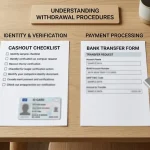
A withdrawal route and an identity check are separate parts of a transaction. A Trustly option, if displayed in a cashier, would not by itself establish when funds could arrive or what amount would be released. The transaction may first depend on the account’s verification status and the operator’s handling of the request.
Online casinos typically require customers to complete a Know Your Customer assessment before financial transactions. That check concerns identity and account details; until it is complete, a withdrawal may not proceed. The payment method cannot replace the assessment, and a method label alone does not show whether an account has cleared it.
For a casino withdrawal involving Trustly, the meaningful distinction is between submission, review and transfer. A request can be entered without having passed review, and approval is not the same event as funds reaching an account. Treating all three as a single “processing time” obscures the point at which a delay occurs. A Trustly-specific schedule cannot be inferred from the fact that KYC checks are common.
The stated payment route also needs to match the transaction terms that apply to the account. A cashier display does not, on its own, establish that Trustly is available for withdrawals, that a particular account qualifies, or that the same route will be used for payment out. Those are distinct conditions, and a deposit option should not be read as confirmation of a withdrawal option.
For Australian residents, these practical distinctions sit within a more consequential legal context. The Interactive Gambling Act 2001 prohibits operators from providing real-money online casino services to people in Australia. Offshore casino use is not protected by Australian consumer law. An apparent withdrawal method does not change either point.
Withdrawal Process
Identity Verification
The customer must complete a Know Your Customer (KYC) assessment regarding identity and account details.
Request Submission
A withdrawal request is entered through the casino's cashier using the selected payment route.
Operator Review
The operator reviews the request to approve the release of funds.
Fund Transfer
Funds are transferred through the payment method to reach the customer's account.
Accordingly, a Trustly withdrawal claim is not a timing estimate. The relevant questions are whether the service is legally available, whether the account has completed the required identity assessment, and whether the operator’s terms expressly cover withdrawals through that route. Without those conditions, a promised arrival window has no useful calculation behind it.
Australian consumers are familiar with moving between cards, mobile wallets and services linked to bank accounts, including PayPal. That pattern describes payment habits; it does not establish that Trustly is available at any particular gambling service. Familiarity with bank-linked payments cannot be treated as evidence of a Trustly option in a cashier.
The distinction matters because a payment method is not accepted merely because it resembles one people already use. A claim that a service supports Trustly would need to refer to that service’s own current payment terms. General statements about Australians’ use of digital payments do not confirm acceptance, eligibility or the conditions attached to a transaction.
The same limit applies to broad descriptions such as “pay by bank” or “bank-linked payment.” Those labels do not, by themselves, identify Trustly. Nor does a payment logo or a general reference to online payments establish that a particular method is available to Australian residents. The practical question is specific to the named service, not to the country’s overall comfort with digital payments.
Payment familiarity also says nothing about whether a gambling service may lawfully provide its offering in Australia. Under the Interactive Gambling Act 2001, operators are prohibited from providing real-money online casino games to people in Australia. Australian consumer law does not protect players who use offshore casinos. A payment option, if stated, would not change either point.
Accordingly, the phrase “casino payment method” needs careful reading: it may describe a claimed feature, but it is not proof of current access or legal status. Trustly acceptance cannot be inferred from the popularity of other bank-linked services, and a general payment claim does not establish that Australian residents can use the method at a casino. The distinction is plain, if not especially convenient: familiarity with a payment route is not confirmation of its availability.
A reference to Trustly alongside online slots does not establish that the payment method can fund a particular service. Payment options can depend on the operator, the customer’s location and the terms shown at checkout. A general statement about Trustly support is not enough to confirm that it applies to real-money slot play in Australia.
The distinction matters because a payment method and a game category are separate claims. A site might describe Trustly as an available payment route without specifying which services it applies to; a page about slots might say nothing about how those services are funded. Neither statement, on its own, confirms that the two are available together.
Claims using phrases such as “Trustly slots” should therefore be read as unsubstantiated unless the terms are clear, specific and applicable to the relevant location. A cashier listing alone would not establish that real-money slot services may lawfully be offered in Australia.
That legal distinction is decisive. The Interactive Gambling Act 2001 prohibits operators from providing real-money online casino games, including slots, to people physically located in Australia. The question is not simply whether a payment route appears on a page: a payment claim does not make a prohibited service lawful or provide Australian consumer-law protection for offshore casino use.
The combination of a game label and a payment brand is not proof of availability, eligibility or legal protection.
Limits are set by each casino and can vary. Check the Amex limits displayed in that casino’s cashier before making a transaction.
Jackpot City Casino, Spin Palace, Ruby Fortune, Ignition Casino, Joe Fortune and PlayAmo are listed as supporting Amex deposits for Australian players. This does not mean they are locally authorised: Australian law prohibits operators from offering online casino games to Australian residents.
Some casinos allow Amex withdrawals, but others do not; a casino that permits them may require you to have deposited with Amex first. Withdrawals can take up to five days to clear, and a fee may apply.
Amex deposits typically have no fee, but a casino may add a 1.5% surcharge, and a 3% currency conversion fee may apply. Withdrawal fees may also apply.
Look for American Express in the casino cashier’s deposit methods and confirm that it is available for your account before submitting payment. An Amex deposit can still be declined if the card issuer blocks payments to that website.
Check whether American Express appears as a deposit option in the casino’s cashier for your account. Availability can vary, and an Australian bank may block a gambling-related Amex transaction.
Some casinos allow withdrawals to Amex, but not all do, and you may need to have made a previous deposit with that card. Withdrawals can take up to five days to clear and may carry a fee; Australian law prohibits operators from offering online casino games to Australian residents.