Reported card acceptance, payment terms and Australian legal status are separate issues when considering casino deposits and withdrawals.

American Express deposits have been reported as available at some online casinos discussed in specialist reviews. That describes a payment option reported by those reviews, not a general feature of the Australian market or an assurance that a particular operator currently accepts the card. Payment arrangements can change, and the presence of an Amex option says nothing about whether an operator may lawfully provide casino games to people in Australia.
That distinction matters because a payment method and the legal status of the service are separate questions. A site might present a card option to an Australian visitor, but that does not make its casino offering lawful. Nor does a successful payment establish that the operator is authorised to provide real-money casino games in Australia. The cashier is evidence of a payment facility, not evidence of permission to offer the underlying service.
The Interactive Gambling Act 2001 prohibits operators from providing real-money online casino games to people physically located in Australia. The restriction covers casino-style services such as poker, table games and pokies. Its focus is the operator’s provision of the service; the Act does not explicitly make an individual player’s use of an offshore site a criminal offence.
Credit-card availability can vary by site and change over time, so check the cashier and the terms for Australia before depositing. The details below offer a concise reference, but do not establish that any listed site accepts credit cards.
Bizzo Casino
Bizzo Casino is listed with a Curacao Gaming Control Board license held by TechSolutions Group N.V.
Kingmaker
Kingmaker lists a minimum deposit of A$30. Its stated payout times are around 90 minutes for crypto and 1–5 days for fiat.
Vegaz Casino
Vegaz Casino lists Curacao license OGL/2024/1335/0780 and a minimum deposit of EUR 20.
JeetCity Casino
JeetCity Casino is listed with a Curacao eGaming license held by Dama N.V.
Thor Casino
Thor Casino lists a Curacao license from Antillephone N.V. (Versus Odds B.V.) and a minimum deposit of EUR 20.
LevelUp Casino
LevelUp Casino lists Curacao eGaming license OGL/2023/174/0082, held by Dama N.V. Its minimum deposit is A$15.
LuckyVibe
LuckyVibe is listed with Curacao Gaming Control Board license OGL/2023/176/0095, held by Hollycorn N.V.
JustCasino
JustCasino is listed with a Curacao Gaming Control Board license.
Ricky Casino
Ricky Casino lists a minimum deposit of A$20, or A$30 to qualify for the bonus. Stated payout times are under an hour for crypto and 1–3 business days for PayID.
Wild Tokyo
Wild Tokyo lists a Curacao license and a minimum deposit of A$10. Its stated payout times are 30–60 minutes for crypto and 1–5 days for fiat.
The Australian Communications and Media Authority, commonly known as ACMA, is the regulator charged with enforcing the Act. Enforcement is directed at the prohibited services and the parties providing them. The practical point is not that a payment card changes the legal analysis: it does not. Whether the payment is made with Amex or another method has no bearing on the prohibition on operators supplying these games to people in Australia.
The legal position also explains why offshore websites can be encountered without being lawful Australian casino services. A site may be operated from another jurisdiction and may describe itself as licensed there, but an overseas licence does not displace Australian law or authorise the operator to offer prohibited casino games to people located here. Accessibility, branding and a functioning cashier are not substitutes for domestic permission.
Australian consumer law does not protect players who use offshore casinos in the same way it protects consumers dealing with businesses covered by Australian law. If a dispute arises over a balance, a payment, an account restriction or a payout, the player may not have the protections and practical routes of redress available in a domestic consumer transaction. The relevant terms may be governed by the operator’s jurisdiction, and pursuing a complaint across borders can be difficult.
That is a material cost of the arrangement, even when no fee appears beside a card payment. A displayed deposit option concerns the movement of funds; it does not establish access to Australian consumer remedies. Likewise, the fact that an individual player is not explicitly criminalised under the Act should not be mistaken for a guarantee of protection against financial or contractual loss. These are separate propositions: the law targets the operator’s provision of the service, while Australian consumer protections do not extend to a player’s use of an offshore casino.
The distinction can be stated plainly. Amex acceptance reported by a specialist review indicates only that the review identified the card as a possible deposit method at certain sites. It does not establish current acceptance across operators, legality under Australian law, or protection if a transaction or account dispute occurs. Those matters require separate consideration, and the card logo answers none of them.
For a reader assessing the phrase “casino sites that accept credit card Australia 2026”, the legally relevant baseline is therefore narrow. Some specialist reviews report Amex deposits at some online casinos, but the Interactive Gambling Act prohibits operators from offering real-money online casino games to people in Australia. ACMA enforces that framework, and Australian consumer law does not protect users of offshore casinos. Payment availability is a factual feature of a cashier; it is not a legal endorsement, a consumer safeguard or proof that the service is permitted.
Legal Prohibition
The Interactive Gambling Act 2001 prohibits operators from providing real-money online casino games to people physically located in Australia.
A credit-card payment form for an online casino generally treats an Amex deposit as a short transaction: the payment method is selected in the cashier, card information and an amount in Australian dollars are entered, and the payment is submitted. The account balance is then updated after processing. For Australian residents, however, this sequence is not a lawful route to fund online casino play: the Interactive Gambling Act 2001 prohibits operators from providing real-money online casino games to people in Australia.
The distinction matters because a payment form can describe what an operator’s system accepts without making the underlying service lawful in Australia. Australian consumer law does not protect players using offshore casinos. The payment steps below are therefore a description of how such forms are structured, not a recommendation to make a deposit.
The cashier is the operator’s payment interface. Where Amex is shown as an option, selecting it opens the card-payment fields. The form requests the card details and the deposit value in AUD. Submitting the payment sends the transaction for processing; a successful transaction is reflected in the casino account balance.
The amount entered is the requested deposit, not a guarantee that precisely that amount will be available to play with. The final account credit depends on the transaction being accepted and on any applicable terms. A payment screen should therefore be read as a set of conditions, not merely as a box for entering a number. The key cost question is whether the cashier or the operator’s payment terms disclose a charge before submission.
Amex casino deposits are described as processing instantly. In practical terms, that refers to the deposit transaction being credited without a stated waiting period once it has been processed. It should not be read as a guarantee that every attempted payment will succeed or that an account balance will update under every circumstance. The relevant distinction is between the processing time of an accepted deposit and whether a particular payment is accepted in the first place.
A specialist review reports that Amex deposits typically carry no fee, while also noting that charges depend on the casino. That is a description of reported terms, not a universal tariff. The cashier and the operator’s payment conditions determine whether a fee applies to a particular transaction. If a charge is disclosed, it changes the cost of the deposit; if none is disclosed, the deposit amount and any separately stated charge should not be conflated.
For instance, a requested deposit amount and a fee are separate components of the transaction. The amount requested is what the payment form asks to send, while a fee, if applicable, is an additional cost under the stated terms. The exact total cannot be inferred from the payment method alone. The operator’s conditions govern, and those terms can differ from one site to another.
This is why “no deposit fee” should not be treated as a permanent property of Amex. It is a term that needs to be checked against the particular cashier and the applicable payment conditions. A fee statement on a general payment page may not settle how a specific transaction is treated. The transaction screen is the point at which the amount and any disclosed charge can be assessed together.
Amex Deposit Process
Method Selection
Select American Express as the payment method within the casino cashier.
Entering Details
Input the required card information and the deposit amount in Australian dollars (AUD).
Submission and Processing
Submit the payment for processing; once successful, the account balance is updated.
A further distinction is necessary between deposit costs and other transaction costs. The report of deposits typically having no fee does not mean that all financial activity connected with an account is free. Nor does it establish the terms for money paid out. Deposit processing and withdrawals are separate transactions with separate conditions, so a claim about one should not be carried over to the other.
After submission, the payment result should be judged by the transaction record: whether the deposit was accepted, what amount was charged, whether a fee appeared, and what amount was credited. Those are the figures that determine the transaction’s actual cost. A displayed processing time describes speed, while the account record establishes whether the payment completed.
For Australian residents, the central issue remains the legal status of the service, not the convenience of its cashier. A fast payment and a fee-free deposit description do not change the prohibition on operators providing real-money online casino games in Australia, or create consumer-law protection for use of an offshore casino.
A card payment can be refused at more than one point. The casino’s cashier may not offer Amex, or the card issuer may prevent a gambling transaction even when the payment method appears on the cashier’s list. These are separate restrictions, and treating them as one problem can lead to the wrong conclusion about why a payment did not proceed.
A specialist review reports that some online casinos do not accept Amex. That is an operator-level decision: the payment method is unavailable there, regardless of whether a particular card issuer would approve the transaction. The cashier’s displayed options therefore do not establish that Amex will be accepted across online casinos, or that a card can be used simply because it carries the Amex name.
The distinction matters because payment acceptance is not a single agreement between a cardholder and a casino. The operator determines which methods its cashier presents; the issuer may separately restrict whether its card can be used for gambling-related transactions. A payment can therefore be unavailable before any authorisation request is made, or be blocked later by the issuer. Either outcome can look like a general failure of the card, but the point of refusal differs.
When Amex is absent from a cashier, the casino is not offering that payment route. When Amex is listed but a gambling transaction is blocked, the restriction may sit with the Australian bank that issued the card. Australian banks may block gambling-related transactions on Amex cards at issuer level. In that situation, the presence of Amex among the displayed methods does not guarantee that the bank will permit a payment.
The reverse is also true: a card that is not blocked by its issuer cannot be used through a cashier that does not accept it. The two conditions are independent. Operator acceptance is about the available payment method; issuer approval is about whether a transaction on that card is allowed. Neither can be inferred reliably from the other.
Payment Refusal
A payment can be refused either because the operator's cashier does not support Amex or because the card issuer blocks gambling-related transactions.
This is why “Amex accepted” can be an incomplete description. It may refer only to a cashier listing the brand, rather than confirming that every Amex card issued in Australia will pass. The relevant status can depend on both sides of the transaction, and a change at either side can alter the result. A payment option shown on screen is not a promise of authorisation.
A failed payment also does not, by itself, identify which side caused the refusal. The method may be unsupported by the operator, or an issuer restriction may apply. Without a clear explanation from the relevant party, the outcome alone cannot distinguish those causes. It is more precise to describe acceptance as conditional than to treat a card brand as universally usable or unusable.
A specialist review describes Visa as potentially more broadly accepted at Australian online casinos than Amex. That is a limited comparison of reported availability, not a guarantee that Visa will be offered by every operator or approved by every issuer. It also does not establish that Visa and Amex are interchangeable: the cashier’s options and the issuing bank’s restrictions still determine whether a particular card payment can proceed.
The practical difference is one of reach, not certainty. A broader reported acceptance for Visa means that it may appear in more cashiers than Amex; it does not settle the status of an individual transaction. Conversely, an Amex option at one operator says nothing about its availability elsewhere. Brand-level comparisons can describe a tendency in reported acceptance, but they cannot replace the conditions attached to a specific operator and issuer.
There is no basis for reading wider acceptance as a statement about transaction security, consumer protection, or legal permission. Those are different questions from whether a payment method is listed or authorised. In Australia, the Interactive Gambling Act 2001 prohibits operators from providing real-money online casino games to people in the country; a payment method being available does not change that position.
For a credit card casino payment, then, acceptance has two distinct gates: the operator must offer the card brand, and the issuer must allow the gambling-related transaction. Amex may be declined at either point. Visa may have wider reported availability, but that comparison does not remove either condition.
Australia’s everyday payment landscape is broad: contactless credit and debit cards are accepted almost everywhere, as are mobile wallets such as Google Pay and Apple Pay. That reach describes routine payments across the country; it does not establish that a particular online service accepts a given method, or that the service may lawfully offer its product to Australians.
The distinction matters when card payments are considered alongside online casino searches. A casino cashier, where one is presented by an offshore operator, is not equivalent to a shop terminal accepting contactless cards. General acceptance of tap-and-go payments says nothing about whether a credit card can be used for online gambling, whether a payment will be processed, or whether an operator is permitted to provide casino games in Australia. Payment convenience and legal availability are separate entries in the calculation.
Under the Interactive Gambling Act 2001, operators may not provide real-money online casino games to people in Australia. The Australian Communications and Media Authority enforces the Act. This means that broad acceptance of contactless payments in everyday commerce cannot be taken as an endorsement or indication that online casino play with a credit card is a lawful service for Australian residents. The payment method does not change the operator’s obligations.
Mobile wallets sit within the same wider pattern of consumer choice. Australians are comfortable moving between cards, wallets and bank-linked services such as PayPal. That comfort is a feature of the general payment environment, not a promise that every merchant supports each option. A wallet may be familiar in ordinary transactions while remaining irrelevant to a particular online cashier. Its presence in a payment menu would not alter the legal position of the underlying service.
The same separation applies to withdrawal expectations. A card or wallet being widely accepted for everyday purchases does not establish that an online operator will return funds through that route. Acceptance for one type of transaction cannot be assumed to cover another. The label “card payment” is not a complete description of the transaction: the merchant, purpose and applicable terms all matter.
An “online casino with no credit card” may sound like a simple payment preference, while a casino deposit by card sounds like the inverse. Neither phrase resolves the central question for Australian residents: online casino games for real money cannot lawfully be offered to them by operators. Offshore sites may remain visible online, but visibility does not make them locally authorised. Australian consumer law does not protect people using offshore casinos, so familiar payment branding should not be mistaken for the protections attached to domestic consumer services.
For ordinary spending, the practical choice among contactless cards, Google Pay, Apple Pay and bank-linked services such as PayPal is a matter of payment preference and merchant acceptance. In the online casino context, the wider payment landscape cannot be used as a shortcut around the law. A method’s prevalence in Australian shops is not evidence of a lawful casino payment route; it is simply a measure of how routinely that method is used elsewhere.
An Amex limit is not a standard feature of the card that applies identically at every online casino. Each operator sets its own deposit and withdrawal limits, and the figures can differ between casinos. A specialist review reports that Amex transaction limits may be higher than the limits offered for Visa and Mastercard. That is a comparison attributed to the review, not a ceiling that can be assumed at every cashier.
The practical distinction is between a general comparison of payment methods and the terms attached to a particular operator. A higher stated Amex limit does not establish what a specific casino will permit, nor does it mean the same limit applies to deposits and withdrawals. The operator’s terms govern those limits; the payment method alone does not determine them.
Reported by specialist reviews as potentially higher than those offered for Visa and Mastercard.
Typically lower than Amex limits according to some specialist reviews.
Specific deposit and withdrawal limits are set by the individual casino and vary by operator.
A specialist review also reports that Amex deposit and withdrawal limits vary by casino. The amount available therefore depends on the operator’s own conditions, rather than a single market-wide Amex cap. A broad label such as “high limit” has little value without the operator’s actual terms beside it. The final permitted amount is the one set for that casino and transaction type.
This makes comparisons between card options conditional. Amex may have a higher transaction limit than Visa or Mastercard in the comparison described by a specialist review, but that does not establish that it will be higher at every operator. The operator-specific limit remains decisive. A comparison that omits those terms cannot show what an account can actually deposit or withdraw.
Deposit and withdrawal limits should also be read as separate conditions. A figure applying to one transaction direction cannot be treated as the limit for the other. Where the casino sets different limits for each, the relevant term is the one attached to that particular transaction. No general Amex comparison overrides those operator-set conditions.
These terms describe how offshore operators may structure payments; they do not make real-money online casino services lawful for Australian residents. Under the Interactive Gambling Act 2001, operators are prohibited from providing such services to people in Australia. The limit comparison is therefore a description of payment terms, not an endorsement of a casino or a recommendation to use one.
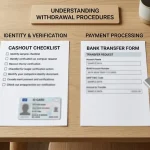
A Know Your Customer assessment is commonly required before an online casino processes financial transactions. It is an account-verification step, not approval of the gambling service under Australian law. Completing it does not make an otherwise prohibited service lawful or create consumer protections that would not otherwise apply.
The legal distinction is between the operator’s conduct and the player’s position. Under the Interactive Gambling Act 2001, operators must not provide real-money online casino games to people physically located in Australia. Casino-style games offered for money fall within that prohibition. The Australian Communications and Media Authority is responsible for enforcing the Act.
The Act does not explicitly make it a criminal offence for an individual to use an offshore casino. That does not mean the service is authorised in Australia, or that an account can be treated as locally regulated. The restriction applies to the operator offering the service to people in Australia; the absence of an explicit player offence is a separate point, not a declaration that the arrangement is protected.
Verification and transaction eligibility should therefore be considered separately from legality. A casino’s request for KYC checks is a condition it applies before financial activity, but passing those checks does not alter the legal status of real-money online casino games in Australia. Nor does the use of a credit card change that status: a payment method cannot convert a prohibited offer into a permitted one.
There is also a practical difference between an account’s internal terms and recourse under Australian law. Australian consumer law does not protect players using offshore casinos. If a dispute arises over an account or funds, the presence of identity checks at the operator does not itself provide Australian consumer-law coverage. Verification may satisfy the operator’s process while leaving the user outside that protection.
The result is a narrow but important distinction: the Interactive Gambling Act prohibits operators from supplying these games to people in Australia, while it does not explicitly criminalise the player for using an offshore site. Neither point should be mistaken for a local approval or a consumer safeguard. A completed KYC assessment is an administrative condition of the account, not evidence that the service is lawful or that Australian consumer protections apply.
An Amex deposit does not, by itself, establish that the same card can receive a payout. The stated condition is that a withdrawal through American Express requires an earlier deposit made with Amex. Even where that condition is met, withdrawal availability depends on the casino: a specialist review reports that some operators do not offer Amex as a destination for winnings.
That distinction matters when assessing an online casino payout to a credit card. A payment method shown in the cashier for deposits is not necessarily available for cash-outs. Deposit support and withdrawal support are separate terms, so the payout options need to be checked independently before funds are committed. If Amex is not offered for withdrawals, the casino’s available payout method determines what happens next; deposit acceptance alone does not settle the issue.
Timing is another separate condition. A specialist review puts the clearing period for an Amex casino withdrawal at as long as five days. That is a possible processing window, not a guaranteed arrival time. The actual wait depends on the casino’s handling of the request and the card payment process, so a displayed status such as “pending” should not be treated as evidence that the funds have already cleared.
Fees also belong on the payout side of the calculation. A specialist review notes that a casino may add a withdrawal charge. This is distinct from the cost of making a deposit: a fee-free incoming payment would not establish that a later cash-out is free. The amount and application of any charge are operator-specific, so the relevant terms are those attached to withdrawals, not just the general payment-method description.
For anyone comparing online casino cash-outs to credit cards, the practical accounting is therefore conditional: an earlier Amex deposit is required, the casino must permit Amex withdrawals, clearing may take up to five days, and a withdrawal fee may apply. If any one of those conditions is not met, the expected payout route, timing or net amount changes. Australian consumer law does not protect people using offshore casinos, so the written payout terms do not provide the protections of a domestic consumer transaction.
A transfer surcharge and a currency-conversion fee are separate cost lines. A specialist casino-payment review reports that a casino may add a 1.5% surcharge to Amex transfers. A specialist card-fee review reports a 3% currency-conversion fee on Amex cards. Neither figure should be treated as a universal charge: the first depends on the operator’s terms, while the second concerns conversion rather than the casino’s own transfer surcharge.
A specialist casino-payment review reports a possible 1.5% surcharge added by the casino to Amex transfers. Separately, a specialist card-fee review reports a 3% currency-conversion fee on Amex cards.
The distinction matters when a transaction is not charged in the card’s billing currency. A casino-side surcharge relates to the transfer itself; a conversion fee relates to changing the transaction into another currency. The two can therefore be relevant to the same payment, but their appearance and calculation depend on the applicable terms. A stated surcharge does not, by itself, establish whether conversion is also involved.
For any online casino accepting credit card payments, the displayed deposit amount is not necessarily the final card cost if either charge applies. The comparison should separate the amount entered in the cashier from any operator surcharge and any card conversion charge. Treating these as a single “payment fee” obscures who applies the cost and what triggers it.
The 1.5% figure is reported as a possible casino charge, not a standard rate across casinos accepting credit card deposits. The 3% figure is likewise a reported Amex conversion fee, not an additional casino surcharge. Terms can change, so the relevant operator and card conditions determine whether either cost applies to a particular transaction.
Where both percentages are relevant, they should be checked independently rather than assumed to form one fixed combined rate. Their calculation bases may not be identical, and the available terms determine the actual amount. A low or absent casino transfer charge would not settle the separate currency-conversion question; conversely, a conversion fee does not prove that the casino adds a surcharge.
For Australian residents, payment options do not change the legal position: the Interactive Gambling Act 2001 prohibits operators from offering real-money online casino games to people in Australia. The comparison below is general information, not a recommendation to use a gambling service.
Bitcoin and Ethereum are described as allowing deposits and withdrawals to be processed instantly, with limited or no fees. That can make their transaction timing and direct charges different from bank transfers. It does not make the overall cost nil: any fee depends on the terms applied to the transaction, and the value transferred may also change.
Bank transfers can take longer and cost more. A specialist review of payment methods reports those potential drawbacks, but the timing and charges are not a fixed feature of every transfer. The relevant terms depend on the service involved, so a comparison based only on the payment label cannot establish the final amount received or the time it will take.
The practical distinction is therefore between transaction speed and transaction cost, not between a universally cheap option and an expensive one. Cryptocurrency may carry limited or no fees and instant processing; bank transfers may involve longer waits and higher charges. Neither description guarantees a particular result for an individual transaction.
An Amex gift card is not a route for receiving winnings. Payment-method information describes its use at casinos that accept American Express as limited to deposits; withdrawals cannot be made to the gift card. That distinction matters because a deposit method does not establish that the same method is available for payouts.
A deposit can also be declined even when a website displays Amex as an option. A specialist review reports that this may happen if American Express blocks payments to a particular website. In that case, the problem is not necessarily the gift card balance or the details entered: the payment may be stopped at the card-provider level. A displayed option is therefore not confirmation that a transaction will be accepted.
These payment conditions do not change the Australian legal position. Under the Interactive Gambling Act 2001, operators may not provide real-money online casino games to people in Australia, and the Australian Communications and Media Authority enforces the law. Australian consumer law does not protect people who use offshore casinos. Descriptions of card or gift-card functionality should not be read as an endorsement or assurance that an offshore gambling transaction is lawful, available, or recoverable if disputed.
Amex gambling transactions are generally free, but a casino may add a 1.5% surcharge, and Amex cards incur a 3% currency conversion fee. Withdrawal fees may also apply.
Deposits typically have no fee, though a casino may charge a 1.5% surcharge. Currency conversion costs 3%, and withdrawals may incur fees.
Check the casino cashier for Amex before attempting a payment: some casinos accept it and others do not. Acceptance can change, so the cashier is the place to check.
Some casinos do not accept Amex, and Australian banks may block gambling-related Amex transactions. A deposit can therefore be declined because the casino or the card issuer does not permit it.
Yes, some online casinos accept Amex deposits, but acceptance is not universal. The Interactive Gambling Act 2001 prohibits operators from offering real-money online casino games to people in Australia.