Bitcoin changes how an account is funded, not the game itself or the legal position of real-money pokies in Australia.

Bitcoin pokies are digital slot-machine games that accept Bitcoin as a payment method. The term combines two separate things: the game being played and the currency used to fund an account or receive a payment. Bitcoin does not change the underlying game into a different type of product. It changes the payment rail.
That distinction matters when assessing claims about real-cash online pokies in Australia. A game may be presented with Bitcoin payments, but the payment option does not determine whether the operator may legally provide the game to people in Australia. Nor does a Bitcoin balance establish that a withdrawal is available or protected. Those questions depend on the operator’s terms and the legal setting, not on the currency label.
The Australian legal position is restrictive. Under the Interactive Gambling Act 2001, operators must not provide real-money online casino games, including pokies, to people physically located in Australia. A foreign licence does not convert an offshore casino into a locally licensed Australian service. The operators discussed in this context hold offshore licences, primarily from Curacao eGaming or the Anjouan Gaming Authority; those are not Australian casino licences.
Choosing a real-cash online pokies site in Australia means checking the details that matter to you before you play. This list provides a starting point, with each verdict limited to the information available for that operator.
Bizzo Casino
Bizzo Casino is listed with a Curacao Gaming Control Board license held by TechSolutions Group N.V.
Kingmaker
Kingmaker lists a minimum deposit of A$30. Its stated payout times are around 90 minutes for crypto and 1–5 days for fiat.
Vegaz Casino
Vegaz Casino lists a Curacao OGL license, number 2024/1335/0780, and a minimum deposit of EUR 20.
JeetCity Casino
JeetCity Casino is listed with a Curacao eGaming license held by Dama N.V.
Thor Casino
Thor Casino lists a Curacao license from Antillephone N.V. (Versus Odds B.V.) and a minimum deposit of EUR 20.
LevelUp Casino
LevelUp Casino lists a Curacao eGaming OGL license, number 2023/174/0082, held by Dama N.V. Its minimum deposit is A$15.
LuckyVibe
LuckyVibe is listed with a Curacao Gaming Control Board OGL license, number 2023/176/0095, held by Hollycorn N.V.
JustCasino
JustCasino is listed with a Curacao Gaming Control Board license.
Ricky Casino
Ricky Casino lists a minimum deposit of A$20, or A$30 to qualify for the bonus. Its stated payout times are under an hour for crypto and 1–3 business days for PayID.
Wild Tokyo
Wild Tokyo lists a Curacao license and a minimum deposit of A$10. Its stated payout times are 30–60 minutes for crypto and 1–5 days for fiat.
This is a material distinction, not a technical footnote. Australian consumer protection laws do not apply to the offshore operators discussed. A licence issued overseas is not a substitute for Australian consumer protections, and it does not make the operator subject to the local protections available for Australian-regulated products. The legal restriction is directed at the provision of the service by operators; it should not be confused with a claim that an individual player is criminally liable merely for playing.
Bitcoin is therefore a payment method within an offshore gambling arrangement, not a route around Australian law. The use of a cryptocurrency does not change the nature of the service, the location of the customer, or the operator’s obligations. Describing an offer as a real-cash casino, or listing Bitcoin alongside other payment options, does not resolve those points.
The practical comparison is also narrower than marketing language can suggest. “Bitcoin pokies” identifies games that accept Bitcoin; it does not, by itself, establish the operator’s legal status in Australia, the protections available if a dispute arises, or the conditions attached to an account. Those matters must be considered separately. The currency name is not a quality mark.
This page is affiliate material and may contain sponsored links. That disclosure does not change the legal position or amount to a recommendation to use an offshore gambling service. The information is intended for adults aged eighteen or over and is not an offer to participate in real-money online casino gambling in Australia.
 Safe Online Pokies in Australia: Bitcoin RisksLearn how Bitcoin transaction security differs from operator safety, including why blockchain records cannot verify a casino’s reliability.
 Casino Sites That Accept Osko in Australia: What to CheckLearn what an Osko acceptance claim can establish, how deposit routes differ from withdrawal options, and why general payment habits are not…
“Free play” and “real-money play” describe different ways of participating in online pokies. The distinction is not cosmetic. A balance displayed during free play is not, simply by being shown on a screen, money that can be withdrawn. Real-money play involves funds being put at risk on games that offer the possibility of a cash return. For people in Australia, that second category also has a decisive legal issue: online casino-style games cannot lawfully be provided to people located in the country.
The Interactive Gambling Act 2001 prohibits operators from providing real-money online casino games, including pokies, to customers in Australia. The restriction concerns the service offered by the operator; it does not make a player criminally liable for taking part at an offshore site. That distinction should not be mistaken for approval, local regulation or access to Australian consumer remedies. The operators discussed in this context are offshore, and Australian consumer protection laws do not apply to them. Their services may also be actively blocked.
Free play is a mode in which a game can be used without staking cash. The balance shown for that mode is a playing credit, not a bank balance. It does not become cash merely because a game displays a win, updates the balance or presents an amount in currency-like formatting. The relevant question is whether actual money was staked under terms that permit a cash withdrawal. In free play, the displayed result is part of the game experience, not evidence of a payable cash prize.
Attention: A balance displayed during free play is a playing credit, not a bank balance, and does not represent withdrawable cash regardless of the visual formatting.
That accounting distinction is easy to miss because the same game interface can present numbers in similar ways across different modes. A balance may rise after a successful round, but the arithmetic inside the game does not establish that funds have been received or that an operator owes a withdrawal. The label attached to the mode matters more than the visual treatment of its balance.
Free play can therefore be useful for understanding how a game behaves, but it cannot establish what a real-money outcome would have been. A sequence of results in a no-cash mode does not create a cash claim, nor does it guarantee that later play with money will produce the same sequence. The mode changes the financial meaning of the result, even when the game looks familiar.
In real-money play, the balance relates to funds that can be put at risk. A win may affect the account’s cash balance, subject to the operator’s terms and any applicable restrictions. A loss can reduce the funds available. That is materially different from free-play credits, which have no cash value merely because they can be used to continue playing.
The difference can be expressed as an accounting test:
| Mode | What the displayed balance means | Does a game result itself establish withdrawable cash? |
|---|---|---|
| Free play | Credits used within the non-cash mode | No |
| Real-money play | Funds exposed to possible loss or return | Not by itself; the account terms and status still matter |
A screen can display both as numbers, but only one relates to money at risk, and the rules governing any return still matter.
In Australia, that distinction does not remove the legal barrier. An offshore operator may label a mode “real money,” accept deposits or describe a cash payout, but those descriptions do not make the service lawful to provide to a person physically in Australia. Nor does an offshore licence make the operator locally licensed. The practical and legal exposure sits with different parties: the law prohibits operators from supplying the service to Australians, while players do not face criminal liability merely for playing.
A game result is only one part of a possible cash outcome. The account must be in real-money mode, the result must be recorded as eligible under the operator’s rules, and any applicable account conditions must be satisfied. A free-play result fails at the first step: there was no cash stake behind it. Converting its displayed value into a supposed withdrawal amount would be treating a demonstration balance as a financial asset.
The same caution applies to language such as “win” or “prize” on a screen. Those words can describe an in-game event without proving that a cash obligation exists. The operational question is not whether the display changed, but whether the relevant mode and account terms attach cash value to that event. Without that link, the number remains a game result.
Screenshots of free-play outcomes cannot establish probable real-money returns or cash entitlements, as they belong specifically to the entertainment mode.
This is why screenshots of free-play outcomes cannot establish what would have happened with money in play. The result belongs to that mode and that sequence. It does not demonstrate a probable real-money return, a dependable earning method or a cash entitlement. Treating entertainment-mode outcomes as evidence about cash returns confuses the interface with the underlying transaction.
The distinction between free and real-money modes is also a distinction between what a person is doing and what an operator is permitted to supply. Free play does not involve staking cash for a cash return. Real-money online pokies fall within the prohibited interactive gambling services that operators cannot provide to people in Australia. Online casino-style games such as slots, poker, blackjack and roulette are covered by that framework.
Offshore access does not change the domestic rule. A foreign licence is not an Australian authorisation, and Australian consumer protection laws do not extend to the offshore operators discussed here. If a dispute arises, the familiar local protections available in other consumer transactions cannot be assumed to apply. That is a practical consequence of dealing with an operator outside the Australian regulatory system, not a minor disclosure attached to the game.
This material is affiliate content and may include sponsored links. That commercial disclosure does not alter the legal position or turn information about offshore services into a recommendation. No operator or game is endorsed here. The relevant distinction remains the same: free-play credits are not cash winnings, while real-money online casino play is a service that operators are prohibited from providing to people located in Australia.
People under 18 must not participate in real-money gambling. For adults, the age threshold does not change the prohibition on operators supplying online casino games in Australia. These are separate conditions: adulthood does not make an otherwise prohibited service lawful, and free-play credits do not become cash simply because the person using them is old enough to gamble elsewhere.
A careful reading of the mode label, balance description and applicable terms prevents one basic accounting error: assigning cash value to credits that have none. It cannot, however, resolve the broader issue of offshore access or create local protections where they do not apply. In this market, the mode determines whether a balance is merely part of play or represents money at risk; Australian law determines whether an operator may offer the real-money service at all.
 Dragon Link Online Pokies in Australia: What to KnowLearn what the Dragon Link name does not confirm, and how free play, real-money access, Bitcoin payments and casino terms differ.
 Casinos That Accept Neosurf in Australia: What to KnowLearn why a Neosurf logo or general payment mention does not confirm deposits for Australian customers, and what remains unverified.
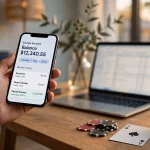
A balance shown inside a game is not automatically a Bitcoin balance. Game credits belong to the particular game in which they appear; their Bitcoin value depends both on that game’s credit arrangement and on the current BTC price. A specialist review describes this relationship, but it should not be treated as a fixed conversion rule across games or operators.
That distinction matters when a screen displays a number without making its unit clear. A credit total may describe playable units within a game rather than a sum that can be read directly as cash. To interpret it in Bitcoin terms, the relevant questions are what the game’s credits represent and how the operator links them to BTC. Without those details, the displayed total alone does not establish a cash value.
The comparison has two moving parts. First, credit values are game-specific: the same number of credits in separate games need not represent the same Bitcoin amount. Second, the BTC price changes, so a Bitcoin-denominated value can change even if the game-credit total does not. A balance can therefore remain unchanged in game units while its equivalent expressed in BTC shifts.
This is a measurement issue, not evidence that a game has become more or less generous. A larger credit count cannot be compared with a smaller one until the units and their conversion are known. Nor does a change in the Bitcoin equivalent necessarily mean the game has added or removed credits. The figures may be describing different things: one is a game balance, the other an estimated value in a cryptocurrency whose market price moves.
A useful reading starts with the label attached to the balance. If it is expressed in game credits, it should be treated as a game-specific quantity. If a separate display gives a BTC equivalent, that is the figure intended to express the balance in Bitcoin terms—but its meaning still depends on the game’s credit arrangement and the BTC price used for the display.
Where the screen shows only credits, converting them mentally into a cash amount is not reliable. The credit count alone does not reveal the conversion. A balance of a given size may have a different BTC interpretation in another game, and the number may be difficult to assess if the game does not make its unit or conversion basis clear.
The same caution applies when comparing two balances over time. A stable credit count is not necessarily a stable Bitcoin value. Conversely, a changing BTC equivalent does not, by itself, show that the number of game credits has changed. Any comparison needs to keep the unit consistent: credits against credits, or BTC values against BTC values.
This distinction also affects descriptions of real-cash casino games. “Real cash” refers to the economic context of play; it does not make every on-screen unit equivalent to a fixed amount of cash. In online pokies, a credit display remains tied to the particular game unless a clear conversion is provided. Treating the word “credit” as if it had one universal value would erase the very difference that matters.
Bitcoin is the second variable. If an amount is stated in BTC, its equivalent in a conventional currency can move as the BTC price moves. The game-credit total and the market value are therefore separate measurements. The first concerns the game’s own units; the second concerns the price of Bitcoin at the relevant time.
For example, a balance can be described without assigning it a fixed cash value: it may contain the same number of game credits while the BTC price has changed. The appropriate interpretation is that the credit count is unchanged, while the external Bitcoin valuation may differ. No precise conversion can be inferred without knowing the game’s credit terms and the price reference used.
That is why a single cash figure can become stale. A value shown at one point may not remain equivalent later if the BTC price changes. A comparison made between games can also mislead if their credit systems differ, even when both displays use the word “credits.” The common label does not prove that the units are interchangeable.
When a value is unclear, the uncertainty should remain visible rather than being replaced with an assumed conversion. A sound comparison records the unit shown, the game to which it applies and, where provided, the BTC equivalent and its stated basis. If those elements are not available, the balance can still be read as a game-credit figure, but not confidently translated into Bitcoin or cash.
A game balance is a snapshot of the units displayed in that game. It does not, by itself, establish a guaranteed cash amount, a stable BTC value or an equivalent balance in another game. Those conclusions require a conversion basis that is specific to the relevant game and sensitive to the current BTC price.
This is especially important when several games appear within one casino account. A shared account does not make each game’s credit unit identical. The fact that credits are specific to each game means that a total should not be carried from one title to another as though it were a common denomination. A comparison across games needs a conversion explanation, not just matching labels.
The practical accounting rule is straightforward: keep the displayed game units separate from any BTC valuation. Treat the former as game-specific, and treat the latter as dependent on the game’s credit arrangement and the BTC price at the time. If a screen does not explain how the two relate, its number is not enough to calculate a dependable cash equivalent. Precision is not improved by adding decimals to an unstated conversion.
This section is informational, not an offer of online casino games. Australian law prohibits operators from providing real-money online casino games, including pokies, to people in Australia. Offshore operators discussed in this context do not receive the protection of Australian consumer laws. The material is affiliate content and may include sponsored links. It is not a recommendation to participate; any real-money gambling discussed is restricted to people aged 18 or older.
For Australian residents, preparation does not change the legal position: the Interactive Gambling Act 2001 prohibits operators from providing real-money online casino games, including pokies, to people in Australia. The services discussed in this context are offshore-operated, not locally licensed. Australian consumer protection laws do not apply to those operators. This is affiliate material and may include sponsored links; it is not an offer of casino services to Australian audiences. Real-money gambling is restricted to people aged 18 or over.
Where an offshore operator accepts Bitcoin, the practical preparation starts before any account is funded. Bitcoin must first be acquired, commonly through a cryptocurrency exchange that allows purchases using fiat currency. That creates a separate account and a separate verification relationship: exchange checks do not necessarily satisfy a casino operator’s identity or wallet checks. The purchase amount, exchange fees and any transfer costs affect the amount ultimately available, so the exchange receipt and transaction record should be retained.
Account registration may involve submitting basic personal information and creating a secure password. The details entered should be consistent with identity and address documents that may later be requested. A mismatch is not a minor clerical issue if the operator uses it to pause a withdrawal for review. Account access and payment evidence should also be kept separately and securely; losing access to either can complicate later checks.
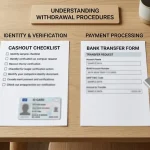
Verification is better treated as a sequence of checks than as a single registration form. The first stage concerns registration information. A later stage can require identity and address documents, either at the first withdrawal or after cumulative deposits reach a threshold set by the operator. The stated threshold range is AUD 2,000–5,000, but the trigger varies by operator; it is not a universal allowance or a reliable point at which checks will begin. Some operators may request documents earlier.
The crypto stage concerns control of the wallet used to fund the account. A specialist review describes possible checks such as signing a message from the deposit address or supplying a wallet screenshot that shows the sending transaction. These are operator-specific procedures, not standard features guaranteed across platforms. A screenshot should show relevant transaction evidence without exposing recovery phrases, private keys or other credentials that grant control of funds. A request for such secrets is not a verification step to comply with.
A specialist review also recommends completing the document and wallet checks before the first withdrawal, ideally within 24 hours of registration, and says this can remove a common source of payout delays. That is a source-specific recommendation, not a deadline or a promise that a withdrawal will be approved on time. The underlying logic is narrower: if identity, address or wallet ownership remains unverified, the operator may hold a withdrawal while requesting evidence. Completing checks early can reduce that particular cause of delay, but it cannot eliminate operator review or processing queues.
Before submitting documents, the account holder should compare the operator’s stated requirements with the information available and keep copies of submitted records and confirmation messages. The operator’s licence and terms do not give Australian residents the protections of Australian consumer law. If a verification request or account restriction is disputed, the offshore setting materially limits the remedies available under Australian consumer protections. These checks therefore describe operational preparation, not an endorsement of offshore real-cash casino apps or a way to make their services locally licensed.
Legal Risk
Under the Interactive Gambling Act 2001, operators are prohibited from providing real-money online casino games to people physically located in Australia.
For residents of Australia, the first condition is legal, not technical: the Interactive Gambling Act 2001 prohibits operators from providing real-money online casino games to people in Australia. Offshore availability does not make those services locally licensed, and Australian consumer protection laws do not apply to the offshore operators discussed here. The process below describes the mechanics, not an invitation to use them.
A Bitcoin deposit starts with the address displayed by the operator’s payment page. The player copies that address and enters it as the recipient in a Bitcoin wallet, then sends the intended amount. The address is the destination; the wallet is the sending interface. A casino balance is not credited merely because the send command has been submitted, so the displayed payment status and account balance are separate pieces of information.
The address should be copied from the casino-provided field rather than retyped. Bitcoin transfers to an incorrect address are irreversible and generally unrecoverable. Before authorising a transfer, the destination shown in the wallet needs to match the copied casino address. The amount and the selected asset also need to correspond to the payment instructions on screen; sending another cryptocurrency does not fulfil a Bitcoin payment request.
A withdrawal reverses the direction of the transfer but not the responsibility for entering the destination. The player copies a Bitcoin wallet address and pastes it into the casino’s withdrawal form, then submits the request. The casino form records the destination requested; it does not itself establish that the address belongs to the intended wallet. The final review before submission therefore concerns the pasted address and the amount shown in the form.
A specialist review describes deposits and withdrawals as being processed almost instantly compared with traditional banking. That is a source-specific description, not a guaranteed completion time. A withdrawal request can still depend on operator approval before a Bitcoin transaction is sent, and transaction processing should not be confused with the time taken for an account balance to update. Claims of speed do not remove the need to check the status shown by the operator.
Bitcoin is not a cash deposit in the ordinary banking sense, and a displayed balance is not proof that funds have reached a personal bank account. For a withdrawal, the relevant distinction is between a request submitted to the operator and a transfer sent to the wallet address. The operator’s form may show the request as pending or processed; the wallet reflects whether the transfer has arrived. Those stages should not be treated as interchangeable.
No-deposit wording also changes none of these payment mechanics. A promotional balance, where one is displayed, is not itself a Bitcoin transfer to a wallet. Any withdrawal request remains subject to the operator’s rules and checks, and a claim of winnings without a deposit does not establish that cash is immediately withdrawable. The amount available for withdrawal should be distinguished from an account figure that is still conditional.
This material is affiliate content and may include sponsored links. That disclosure does not change the legal position or provide Australian consumer protection for offshore operators. Real-money gambling is restricted to adults aged 18 or over, but age eligibility does not make an offshore online casino lawful to offer its service in Australia.
A Bitcoin withdrawal can be delayed before it reaches the blockchain. Operator-side approval queues, incomplete identity checks and processing restricted to business hours can all hold up a request. A specialist review reports that most Bitcoin withdrawal transactions are completed within an hour; that reported timing does not account for every operator’s internal approval process.
A delay is not proof that a transfer has failed. The relevant distinction is whether the operator has approved and sent the withdrawal, or whether the request is still being reviewed. Some operators may subject significant wins, particularly on new accounts or first large withdrawals, to security reviews that become a stalling tactic. Keeping the request status and any operator correspondence helps establish where the delay sits.
A deposit that does not appear may have been sent to a reused address, may not meet the required amount, or may not yet have been detected by the operator. These causes differ from an address error. Bitcoin and Ethereum transfers sent to an incorrect address are irreversible and generally cannot be recovered; an operator cannot simply reverse the blockchain transaction.
A stuck withdrawal should not be treated as a reason to send more money. No additional deposit should be made to “unlock” a payout. That demand does not resolve an approval queue or a verification hold and adds another potential loss.
The legal setting also affects the value of any remedy. Australian law prohibits locally licensed online casinos from offering real-money pokies to residents. Offshore operators do not come under Australian consumer protection laws, leaving fewer local avenues for resolving a payment dispute. This material is affiliate content and may include sponsored links; that disclosure does not change the legal position. Real-money gambling is restricted to adults aged 18 or over.
A promotional balance is conditional: its usable value depends on the operator’s rules, not just the amount displayed. One material term is the wagering contribution assigned to each game category. If the rules are unclear, the balance calculation can become a dispute over which play counted and how much.
Contribution rates can differ sharply. Table games may contribute 0%, while pokies may contribute 100%; some high-RTP games can be capped at 50%. A balance played on a game with a lower contribution rate therefore progresses differently from one played on a game with full contribution. The percentage needs to be checked by game category, rather than inferred from a general bonus summary.
Maximum-bet conditions create a separate exposure. Exceeding the stated limit can void bonus play, so a balance that appeared eligible may be removed under the promotion’s terms. The relevant comparison is between the recorded bet and the limit applying while bonus conditions remain active. If the terms do not explain that limit or how it is applied, the basis for a later decision is difficult to assess.
Clear records matter in a dispute: the offer terms in force when accepted, the game category, the contribution rate, and the bet history. A disagreement may concern whether a game was excluded, a contribution was capped, or a maximum bet was exceeded. Those are separate questions and should not be collapsed into a single claim that a bonus was “miscalculated”.
Australian law prohibits operators from providing real-money online casino games to people in Australia. Offshore operators are outside Australian consumer protection laws. This is informational affiliate material and may include sponsored links; it is not an offer or recommendation. Real-money gambling is for adults aged 18 or over.
Free-play credits are not Bitcoin and cannot be withdrawn as cash. The stated way to acquire Bitcoin is to buy it with fiat currency through a cryptocurrency exchange.
Bitcoin can be used as a payment method at offshore casinos, but it does not make real-money online pokies lawful to provide to people in Australia. The restriction applies to operators; playing at an offshore site does not itself make an individual player criminally liable.
The games discussed are digital pokies, which can be played in free-play or real-money mode. Free-play credits have no cash value and are not withdrawable.